Showing posts with label Safety. Show all posts

Autism As A Label

Autism is something that's often considered by neurotypicals as "just a label" and not something you should be putting on yourself. Despite this, the autistic community take a very different stance on it, and that includes those members of the community who are self-diagnosed. As someone with lived experience of being told "it's just a label" prior to diagnosis, and then seeing and fully appreciating the value that said diagnosis brought, I thought this would be an important topic for me to discuss here.

After my first autism assessment concluded that my only issue was a lack of confidence it left me unsupported and without the closure I was seeking as both me and my wife knew there was more to it than the assessors had decided. That's why when I moved back to York I decided to go for a second opinion. The first GP that I saw in York was of an older generation who clearly didn't believe in mental health issues, which was shown by how she dealt with other family members seeking help by pretty much rejecting them and telling them they were over reacting. Anyway, in my particular case she asked why I want to label myself with something like that, she told me I didn't need it and then gave me the details of another mental health service that wrongly sent me to a couple of months' worth of CBT sessions for social anxiety. I soon realised the CBT wasn't working and arranged an appointment with a different doctor who then set the ball rolling for me to get assessed in York (my previous assessment was in Leeds).

Fast forwarding to over 18 months later I finally got my autism diagnosis, but not before I had difficulty at work in requesting reasonable adjustments because my role had changed. I think I explained in a previous post about the issues I had at work so I won't go into it here, but the long and short of it is that I had to fight for months to get any adjustments put in place throwing all sorts of law and regulations at them before I finally got the adjustments I needed, but even then it was on a temporary basis until I got officially diagnosed. My diagnosis came just as the temporary period was about to end and it made sure that it was made permanent. So that's one way in which being "labeled" by a diagnosis would have helped me much sooner when it comes to the world of work.

On a personal level though, the uncertainty of "am I/aren't I?" was unbearable and the acknowledgment that my diagnosis brought gave me so much closure and relief. I felt like I could finally be open about being autistic and discuss it more publicly than just in the online autism community. A fellow autistic online (can't remember who it was, but if I remember I'll edit this to credit them) once said that labels in the sense of food packaging are helpful because they give so much information about the food, nutritional information, allergens and so on, and basically said that an autism diagnosis is the same in that yes it is a label, but it's one that helps others understand that you might not thrive in social situations, or that you might be sensitive to loud noises, or that you might really, really enjoy trains or wrestling or anime or psychology or literally anything else. It's a much quicker, easier and more painless way of communicating your needs and your reasoning. Imagine if someone questions what you're doing when you're flapping your hands. If you answer along the lines that you're self-stimulating to soothe yourself because you're feeling overloaded they're likely to think you're a bit of an oddball, whereas if you answer with "I'm autistic," their reaction will probably be closer to "Oh, I get it now." At least, I like to think so anyway.

Autism diagnosis or a self-diagnosis isn't JUST a label. To many of us it's validation, it's acceptance, it's acknowledgement, it's understanding, it's a weight off our shoulders, it's a word that we can give to society to explain who we are. This is why we should be congratulated when we receive a diagnosis in adulthood instead of commiserated. I like to think that the same congratulations should apply to a family whose child has been diagnosed because it means they've been given a greater understanding of what exactly they may have been struggling with (if struggling at all - each family will be different) and what they need to do to help both their autistic child and themselves as a family. But in reality a lot of parents let their lack of understanding manifest in grief, and/or taking the wrong route in an effort to support their child (such as ABA for example). I guess being late diagnosed may have saved me from something like that in my childhood, but on the other hand there are things that I really would have benefited from had I been diagnosed in childhood.

I was bullied at lot at school and I would hope that having a diagnosis would have helped with that. I think it would have been another target for the bullies to get at me for, but I really, really hope that if I had been diagnosed my school would have done a hell of a lot more about it than what they actually did, which theoretically would have counteracted the bullying.

I've never been good at making or keeping friends and I believe firmly that if I knew I was autistic I would have received much more understanding from my peers as well as possibly known my own limitations and set boundaries for social situations.

Tying into that is my eternal struggle (until I met my wife) with romantic relationships. Each of my 3 previous relationships was shorter than the last, and the first 2 ended primarily because I was a lot more interested in them than they were in me. It's only in the last couple of months that I've discovered this is a very common autistic trait and the person we're dating can become a sort of special interest. Again, I think knowing I'm autistic and being able to explain that to my partners at the time would have theoretically made them a bit more patient and understanding of how I am. Either that, or it could have put them off completely and made them not enter a relationship with me in the first place. If I'm honest I don't know which route would have been better.

And finally, I think it would have benefited me in a professional capacity as well to have known I'm autistic. I've had more jobs than I think most people have, and I left a lot of them on bad terms. I know I've said it a lot here but it all comes down to understanding as I could have explained my needs and my employers could potentially have been more accommodating of them if we knew I was autistic. Don't get me wrong, there were non-autism-related issues that came up with some jobs (like when I was 20 or 21 I would show up to work hung over more often than I should have), but overall it was mostly issues that could have been addressed and dealt with had I been diagnosed autistic earlier on in life.

So there you have it. That's my take on the "label" of autism, and how it can be an extremely helpful thing for an autistic person to have in life. This is just my personal experience though, and I'm sure that there are infinite other benefits that autistic people have/would have experienced from it depending on when they were diagnosed. Please hit the Follow button in the side bar and follow me on social media. I'm on Twitter, Facebook, Instagram, Pinterest, and you can buy me a coffee at my Ko-Fi account here.

[Image description: A red and white name badge that says "Hi, I am" in a digital font, and then "Autistic" in a font that resembles handwriting. This is on a white background with "Autism" written at the bottom in rainbow colours, and under that is "As a Label" in black.]

Social Hangover

Being diagnosed autistic later in life is weird in a way. There are some things that even now, 18 months after diagnosis, I'm still working out about myself and my past even though in reality they should have been clear signs that I'm autistic. The thing that dawned on my most recently was that whenever I went on a night out I would always feel hungover the next morning, even if I didn't drink. There was a period of about 6 months in my early 20's where I couldn't drink because of the medication I was on, and there were other times here and there where I chose not to drink for different reasons, but every non-drinking night out still left me with what felt like a hangover the next morning. Granted, a less intense hangover than if I had been drinking, but other than intensity it felt pretty much the same. I never knew what it was until it randomly occurred to me the other day.

Now that I'm armed with the knowledge that I'm autistic I've put it down to being worn out by social interactions. I would wake up feeling nauseous, which is known to be a common thing in neurodivergents. When you feel anxious or worried for example, you feel it in your stomach which is why a lot of autistics develop stomach issues or other digestive issues. Growing up autistic (especially if you don't know it) is a stressful experience so it makes a lot of sense that my stomach would be sensitive the following day. I also used to feel physically over-sensitive after a night out, which does happen when I'm tired. I don't think that's just due to staying out late because at the time I was largely struggling to find work so I slept in a lot due to having nothing to really get up for. So the tiredness must have been mostly from trying to be sociable and exhausting myself. I sometimes had a headache in the morning as well, although that wasn't as frequent as the other symptoms. They are all signs of tiredness and/or stress which makes a lot of sense if I'd been putting a lot of effort into masking.

Masking isn't something that I've ever been aware of doing, but looking back I must have masked in some way or another through my childhood and up to around my mid-20's for nobody to have realised I might be autistic. It's a common thing for autistics to not know where the mask ends and where they begin so it's not surprising that I've never knowingly done it.

It's just a quick one this week because I just wanted to share that sudden realisation that when I used to go out but didn't drink I got social hangovers. To be honest, I'm not even sure if "social hangover" is the right term for it, or if there's even a term for it at all so I'd be interested to hear what you call it in the comments or on social media. Also let me know if you get social hangovers whether it feels the same or different for you. Please hit the Follow button in the side bar and follow me on social media. I'm on Twitter, Facebook, Instagram, Pinterest, and you can buy me a coffee at my Ko-Fi account here.

[Image description: Black silhouette of a human holding their head with both hands and lightning bolt-like symbols near the head to show distress. Below that is "Autism" in rainbow colours, and under that is "Social hangover" in black.] 

Anxiety

If you're a regular reader, or if you've read some of my older posts, chances are you'll know that alexithymia is one of the autism-related conditions I've got, which basically means I have difficulty expressing my own emotions in words, and sometimes even understanding them at all. So with that in mind it's hardly surprising that I'm only now starting to realise that I suffer more with anxiety than I ever thought I did. It's funny how things like this can be there and affect you without you even realising it. I can only remember a couple of times where I've noticed the classic symptoms of anxiety such as nausea, sweating palms and so on.

I've never been the most confident of people but I think there's much more to it than that. I'm always doubting myself, wondering if I'm doing the right thing, wonder if I/what I'm doing is good enough etc. For example, most of the time when I hit the Publish button on a new post I immediately wonder to myself if I've just written a load of crap. Someone on Twitter a while ago once said something that resonated with me quite a bit. They said that perfectionism isn't good because it's often driven by anxiety. I consider myself a perfectionist and I never thought of it like that before. One of my old jobs was preparing route packs for a distribution company and my my supervisor once praised me on how immaculate they are, but said I'm making them too perfect and spending too much time on it when I should be getting each one done as quickly as possible. This is most likely driven by anxiety that I want to do the best job I can because I don't want to get in trouble so I make it as perfect as I can, but that takes more time than they like. I ended up being made redundant from that job but my perfectionism isn't something I've ever been able to change. I'm very rigid in that sense, which is a classic autism trait. When I do something I has to be perfect, and more importantly it has to be right.

As far as I can remember I've always been one to look quite negatively on myself as well as things that could happen. If there's something that I can see a potential negative outcome for I usually spend a lot of time thinking "what if" although I like to think I'm also good at balancing out the positives and negatives and looking at the probability of each outcome. Whenever I get a notification for something on my phone, if the notification shows the first few words of the message I usually have a feeling of dread as though someone is definitely going to have a go at me, or give me some bad news or something. Somehow that doesn't tend to happen if it doesn't show the start of the message in the notification, and of course my feeling of dread is always wrong. There was one time recently where I'd done something wrong that annoyed my wife, and I spent a while thinking I'm a moron and what if she hates me and all those kind of things. This is when the logical thinking kicks in - sometimes on its own, sometimes deliberately. I start thinking that she's human and that she's an emotional and anxious person herself, and she'll calm down eventually, and whatever I did definitely doesn't warrant a divorce. I know she reads my blog so I just want to quickly clarify that I've never thought she was going to divorce me, but just using that as a worst case scenario that I can rule out to reassure myself.

When I first asked my GP back in 2017 to refer me for a second opinion on an autism diagnosis she refused and gave me the details for a self-referral mental health service that I then contacted, and they concluded that I had social anxiety. While I don't deny that I'm very socially anxious the help they gave me was a waste of time mainly because autism still wasn't addressed as the underlying cause of it. You may be wondering what difference it makes as autism isn't something to be treated or cured, but to a certain extent a diagnosis of autism can make a world of difference because it can be very validating and gives a much simpler way of explaining how you are to other people: "I'm autistic." Not that it solves anxiety - social or otherwise - but it certainly helps in my experience. They booked me in for CBT therapy and after a couple of months I realised it wasn't working and stopped. Shortly after that I went back and saw a different GP who then gave me the referral that lead to my diagnosis.

At the moment I'm fine with my anxieties because they don't cause much of an issue, but who knows - after lockdown is over my situation will most likely change so I may need to revisit CBT or a similar therapy depending on how things go. At the time of writing my employer are expecting me and the rest of my home working team to return to the office after lockdown (I've worked from home for a couple of years and we were supposed to return to the office in early April until the pandemic happend). At lot of people have come and gone in the office since I started working from home, so it'll be like going into a completely new environment when we eventually do go back. With that said, my son will be starting school in September which might give me more downtime to decompress and process things, so we'll have to see how it goes.

So there you have it. It's definitely possible to have anxiety without realising it, and I think it's safe to say that goes for almost any mental health issue as well. I'm still unpacking my anxieties bit by bit, but I hope what I've unpacked so far has been insightful and interesting. Please click Subscribe at the top of the page and follow me on social media. I'm @DepictDave on Twitter, Facebook, Instagram, Pinterest, and you can buy me a coffee at my Ko-Fi account here.

[Image description: Silhouette of a person on a chair, hunched over slightly holding their head. There are bubbles showing thoughts entering their head including "Don't," "Can't," and "What if..." Under the silhouette is the word "Autism" in rainbow colours and "Anxiety" in black under that.]

Washing A Weighted Blanket

A lot of autistics - myself included - love weighted blankets. They're not only good for autistics from a sensory point of view, but they're also good for any mental health issues such as depression and anxiety. I always describe it to people as "a big, one-person hug" and I sleep under mine every night.

Obviously with me using it so much, and also with having 2 young kids around as well, it's bound to get dirty sooner or later. My daughter got mine dirty a while ago and it ended up sitting in the corner being unused for ages because I had no idea how to clean it. I eventually got round to finding out online how to clean it so I thought I'd explain how to do it here, as well as the mistakes I made so you don't repeat them.

First of all, weighted blankets do tend to be machine washable, although due to the weight of them it's best to hand wash them unless you've got access to an industrial washing machine. The same applies with tumble dryers.

Hand washing is simple. If you're washing the whole blanket you'll need a bathtub or something of a similar size to wash your blanket in. Regardless of how much of the blanket you want to clean you'll also need a mild detergent and somewhere to dry it. I'll explain the process here as though you're washing the whole blanket.
  • The first thing to do is to fill your bathtub with enough lukewarm water to completely submerge your blanket, and add between half to a full cup of mild detergent depending on the size of your blanket. Strong chemicals, such as bleach for example, can damage your blanket so it's best to avoid them. Make sure the detergent is spread evenly by running your hand through the water.
  • Put your blanket fully submerged in the water and gently clean it by kneading it. It's best to do it in sections so you know where you've cleaned and where you need to go next.
  • Once you've cleaned it with soapy water, drain it all out of the bath and rinse the blanket all over with clean water, I used the shower rather than the bath tap as being able to move it freely made it a lot easier. Brush or swish the blanket with your hand to make sure all the soapy water has gone. Do this until the water from the blanket runs clean. When I cleaned mine the water coming from it was quite dark so it's easy to tell.
  • Get rid of as much water as you can from the blanket, although in my experience you're not going to get rid of anywhere near all of it. Avoid wringing the blanket out like you would with most clothes as it can misshape the blanket. Instead it's best to fold it or roll it on top of itself and press on it to squeeze out the water. The tighter you roll it the better, although my blanket is too big to roll it effectively.
  • The final stage is drying. You may need to think about where you've got the room to hang your blanket out to dry, which I found quite tricky. If it's the middle of summer and you have somewhere to hang it outside then it's easy enough but I had to get slightly creative with mine, which I'll go into shortly.
There are 2 mistakes that I made when I washed mine. The first one was that even though it was just a small area that my daughter got mucky I thought it was best to wash the entire blanket. I could have just washed the dirty area, which would have been a lot quicker and easier and I could have probably done it in the sink instead of the bath. The other mistake I made was that I assumed that I could just hang it up to dry on the kids' climbing frame in the garden overnight. The issue with that was that it was in winter and I underestimated how cold it'd be. My thinking was that even if the temperature doesn't dry it, it should still drip dry at least to a certain extent. I was wrong. I woke up in the morning to find it frozen solid. And yes, it was a stupid thing for me to do in the first place. After that I looked around in the house for where I could put it to dry next to a radiator. I ended up unfolding the decorating table on its side in the bedroom, and laying my blanket across it next to the radiator. I kept checking it every now and then and rotating it as it dried. So the lesson from that is plan ahead where and how you'll be able to dry it.

Hopefully this post has been useful as weighted blankets are quite popular among neurodivergents in general, not just autistics. If it's helped you or if it's been interesting please click Subscribe at the top of the page and follow me on social media. I'm @DepictDave on Twitter, Facebook, Instagram, Pinterest, and you can buy me a coffee at my Ko-Fi account here.

[Image description: Black and white outline image of a washing machine. The drum has water in it, and in the water is the text "10kg" as that's the weight of my blanket. Under the washing machine is "Autism" in rainbow colours and "Washing A Weighted Blanket" under that.]

Autism Myths

When thinking of autism most people will conjure up images of some sort of stereotype, quite often in the form of either Sheldon Cooper or Dustin Hoffman's Rain Man. While some autistics may have certain qualities and/or "super powers" reminiscent of these stereotypes, autistics are much more than just the visible traits seen in the media.

Fellow autism advocate Christa Holmans (Neurodivergent Rebel on YouTube) did a short series of "You can't be autistic because..." videos on her channel that addressed some myths around what people think autism is/isn't. Just because I think she's bloody brilliant I'm going to use one of the myths that she busted as an example for this post. In one particular video she addressed the myth that "You can't be autistic because you have empathy." While some autistics do lack empathy (I do struggle with empathy unless it relates to someone I know and/or care about) the majority of us find that we either have too much empathy, or we just don't know how to show it even though we're feeling empathy. These could result in any number of outward responses depending on the person. Some may be overwhelmed by their empathy, some may not show any outwards signs because they don't know how to, and for others like me it varies depending on the person or situation. For me, even if I do feel a lot of empathy I don't really know what to do with it. If it's my wife who's feeling upset for example, I'll cuddle her and try to talk to her even though I don't know what to say. I don't think I'm empathetic to most people, and overall I'm more empathetic towards animals than people.

Judging by my dad's reaction to me getting assessed for autism I think the reason he's not convinced is because all he can see is the stereotype that we're all severely handicapped and dependent on full time care. Our needs are many and varied, and each person's needs are different from each other. In my case, I've been holding down a full time job for 9 years until recent weeks (I'm still working but had to go part time due to unrelated circumstances), I'm happily married, I'm a dad of 2, I drive, I do a lot of other things that a stereotypical view of autism wouldn't allow. I'm hardly handicapped. And while I admittedly think I'd struggle to live fully independently I'm independent enough to do all of the things above. There are definitely things I struggle with such as dealing with finances and remembering self-care aspects if my routine has been disturbed but I'm far, far from the image that my dad has of autism.

There are misconceptions that we all have "super powers" in the vein of Rain Man who is able to instantly count the number of toothpicks being dropped. Some people do have intense skills not usually seen in neurotypicals, but not all of us do. I remember seeing something online a few years ago about an autistic artist who accurately drew the New York skyline purely from memory. In contrast I've got no intense skills that I know of, just a determined mindset when I'm trying to do something that sees me putting more effort in to achieve an outcome than neurotypicals would. When I used to go to the gym a lot in my early 20's my personal trainer told me I was one of the hardest workers in the entire gym. At work my team leader has got me involved in a project analysing the team stats because I like analysing figures and if I'm stuck I'll either keep working at it or ask for help from someone who knows what they're doing. It's this determination that gets me to where I want to be. In fairness, people with extreme skills might rely on determination like this a lot more than it seems from an outside perspective, but it could be a mix of society's view of autism as well as unseen internal effort that makes it look more natural and easy than it is.

People often don't consider that if somebody doesn't show any physical signs of disability it doesn't mean they're not disabled. Disabilities can also be mental/emotional, and regardless of whether it's physical or mental, a lot of disabilities can fluctuate meaning some days they're bad and some days they're not. Autism is referred to as the invisible disability for a reason and is legally considered a disability in the UK, although some autistics might not consider themselves disabled depending on how much it affects them in daily life. Things like sunflower lanyards are great for highlighting when somebody might have hidden struggles or need extra support while in a public space. In fact, I was recently on holiday at Butlins with the wife and kids, and when we were in the club one night for one of the shows there was a young boy at the table next to us with a sunflower lanyard. I did wonder if he was autistic but there are lots of other possibilities that it could be. Either way, I don't like to ask people if they're autistic - I let them approach me about it when they notice my "This is what autism looks like" hoodie, which has happened a couple of times recently.

These are just a few examples of the myths and stereotypes that surround autism, although there are many more. If this post has been interesting and you'd like to see more please click Subscribe at the top of the page and follow me on social media. I'm @DepictDave on Twitter, Facebook, Instagram, Pinterest, and you can buy me a coffee at my Ko-Fi account here.


[Image description: Question marks on a white background. The middle one is the biggest and is in rainbow colours to represent autism. The others are black, various sizes and scattered around the image. At the bottom of the image is the word "Autism" in rainbow colours and "Myths" directly under it in black.]

Survey Results

Thanks to all who took part in my autism survey during World Autism Awareness Week! There were 21 responses to it, which isn't as many as I'd hoped for but the results were interesting and I'm pleased to report them here in this post for you. Just as a reminder, these were the questions:

1. Age
2. Gender
3. Are you/anyone you know autistic?
4. If yes, who?
5. What is your understanding of autism?
6. Is autism a disability?
7. Which of these terms are you familiar with? (there were several options including stimming, meltdown, alexithymia etc.)
8. Is there anything that you think autistic people can't do?
9. Is there anything that you think autistic please can do better than others?
10. What autism stereotypes are you aware of?

One of the most interesting things I've noticed from it is that all but 1 answered yes to being/knowing someone who is autistic. The first thing that this implied to me is that people don't seem to care or have any interest in autism unless they're either autistic themselves or have some involvement with autistic people such as family members, school pupils and so on. This is what we need to work on because if the general population aren't interested in autism they're going to know nothing about it other than maybe the common myths and misconceptions. In turn, if society doesn't know anything about autism it doesn't bode well for autism acceptance and creates an environment where autistics have to mask too much, suppress their stims and continue to live in a social environment that's very exclusive of us. Needless to say, that's what I and many others are working to change with blogs, vlogs, conferences, activism and everything else we do.

Age-wise, a third of the people surveyed are 18-25, another third are 30-50, and the other third (other than 1 participant) were under 18. Nobody over 50 took the survey. There were a couple of interesting points that the age of the participants showed me. Firstly, the lack of 25-30 year-olds which I don't understand what it means (if it means anything at all), but it's just interesting because it was unexpected. The other thing that's interesting is that there were no over 50's and there were more under 18's than I expected. I like to think that's an indication that times are changing, and despite the last paragraph it's showing that we are moving in the right direction - or at least beginning to. Speaking of things moving in the right direction, most of the participants answered that they're female. That could be an indication that autism in women is starting to be more recognised and understood, whereas previously it was thought to be an almost exclusively male condition.

Out of the people who answered yes to either themselves or somebody they know being autistic, 62% said it was themselves. 29% (including some of the 62%) said it was members of their family, which shows that there is definitely a genetic and probably a hereditary element to autism as I expected. It wouldn't surprise me if some of the others had autistic family members without realising it, just like I wouldn't be surprised if either or both of my parents are autistic. Some of the other answers include friends, neighbours and children they work with.

For the question asking what their understanding of autism is the answers were pretty much spot on with reality, which is to be expected given that most of the participants are autistic themselves. I was hoping for more non-autistic responses to give a more rounded picture of how society sees autism, but I am pleased that those who did take part have a good understanding of it as it can be difficult even for us autistics to understand. Most of the answers centered around it being a difference or a condition rather than a disability. It absolutely can be a disability, but everyone is different so not necessarily. The answer that stood out to me was that it's a condition that results in slowed learning but doesn't make the person any different. It's not a wrong answer, but because it's a broad spectrum there is more to it than our learning necessarily being slowed. Some might be unusually quick learners (a former team leader of mine at work used so compare me to a sponge because I take everything in), some might be slow, some might just be affected by any comorbid conditions they have, or any number of other factors. There are a couple of answers that used different wordings than I would have used and some that referred to stereotypes but nothing that was inaccurate because most stereotypes have at least some autistic people that relate to them.

For the next question "Is autism a disability?" a strong 62% answered yes, which is interesting because it's certainly classed as a disability by legal definition here in the UK, and is commonly referred to as the invisible disability. With that said, I personally both agree and disagree with it being a disability. My view of it is that autism in itself isn't a disability, but it can certainly cause disabilities based on the varied ways that it affects each individual. More people said they don't know if it's a disability than those saying no, which I'm surprised at as I thought it would mostly be a black and white yes/no scenario.

Where I asked what autism-related terms people are familiar with it was a pretty well rounded response with nothing getting less than 76% - that is with the exception of alexithymia at just 52%. I expected it to have one of the lowest percentages because it's only in the last year or 2 that I myself discovered that alexithymia. If I'm honest, that discovery was probably the biggest "ah-ha!" moment for me but I've already done a post about that a while ago if you want to read more. Meltdown scored 100% which isn't surprising. I would have expected neurodiversity to not score as high as it did (95%) if it wasn't for the participants being mostly autistic themselves.

The next question was whether there's anything that the participants believe autistic people can't do. The answers were pleasantly similar here to the understanding of autism question in that they're pretty realistic and positive. There was a solid understanding that every autistic is individual with their own set of skills, strengths and weaknesses so there's nothing that just the fact that they're autistic means they can't do. Again, there were some stereotypes but I think for the most part these are based on issues that the particular person faces rather than autistics as a whole.

It was the same kind of response for the question about things that autistic people can do better than others - mostly realistic, positive and that it varies from person to person. What I like about the answers to this question though is how much it portrays autism as a strength. There were things like becoming experts/specialists in their special interests, strong sense of logic, and a few other things that I'm not sure whether to class as stereotypes or just extremely common traits that a lot of us share such as being direct and to the point. But overall they do agree that it's different for each person and that whatever each person's traits are it doesn't make them defective or broken.

The final question asked what stereotypes the participants are aware of. The biggest thing I noticed from this was an extension of a stereotype I was already aware of, which is that autism only affects white males and mostly children. What I didn't know was this this stereotype also extends to sexual preferences and gender identities. Apparently the stereotype is that those white males also have to be straight and cisgender. Of course in reality autistic people are as diverse as everyone else in race, skin colour, gender, sexuality, age and everything else. The other most common answers are that we're stereotypically rude, selfish, good at maths and bad at empathy. We're not rude, selfish, badly behaved or any of that. Well, some of us can be but just in the same way that some neurotypicals can be rude, selfish and badly behaved while others aren't. That's not an autistic thing but we're landed with the stereotype anyway. My understanding was that we're meant to be good at computing and science rather than good at maths but I suppose there's links between maths and science. Empathy is another big one. Some autistics aren't good at empathy (myself included), whereas others have lots and lots of empathy but their either considered weird when they show it or they just may not know how to show it.

So that's a brief analysis of the survey results. Thanks again to everyone who took part! Although there was a distinct lack of non-autistic input which wouldn't have been the case had my original plan gone ahead (bloody Coronavirus!), I'm pleased that the answers I did get showed a good understanding of autism. If this has been as interesting for you as it has for me please click Subscribe at the top of the page and follow me on social media. I'm @DepictDave on Twitter, Facebook, Instagram, Pinterest, and you can buy me a coffee at my Ko-Fi account here.

Skill Tree

I was watching a YouTube video earlier today about how to explain autism to people who don't understand it. While watching that I had my own idea of an analogy that could help explain autism to people, so I wanted to post it here and see what people think. One of my biggest self care activities is playing video games, and I'm a fan of video games like Horizon Zero Dawn and Assassin's Creed where you build up your character by earning skill points that can be exchanged for skill from a skill tree. Obviously you'll be stronger and have more abilities and tactics at your disposal with each skill that you unlock, but each given one tends to be optional.

So I came up that this skill tree analogy, where we imagine life as the game that we're playing with a largely neurotypical society being the setting for the game's events. There's an image near the bottom of this post to help explain the analogy, but in this scenario neurotypicals naturally have most - if not all - of the skills shown in the skill tree image. Conversely, autistics tend to naturally grasp few - if any - of these skills although it's not unheard of for autistics to study, learn and achieve some of the skills. If we look at the example image, we can take the example of small talk that neurotypicals tend to naturally be good at and comfortable with. I on the other hand, can't do small talk to save my life. I myself have never taken the time to do some people-watching to study social interactions and try to learn how they work, but there are certainly other autistics who have, and had success with it to the point of being able to effectively "fake" small talk. With that said, how comfortable they may or may not be at the time is a completely different issue.

Empathy is also something that autistics stereotypically struggle with. The reality is that yes, some autistics (myself included) do absolutely struggle to feel empathy, although many other autistics do feel empathy but either express it differently or don't know how to express it at all. Sometimes, an autistic person can feel so much empathy for a person that it overwhelms them and the outwardly become what neurotypicals would deem to be overly emotional. I've never been one to feel or express a lot of empathy in face to face situations, although my empathy has really improved at work where I deal with customers over webchat instead, so the only contact I have with other humans is through a computer screen via instant message. Even then, it took a long time and a lot of work for me to learn when I should show empathy and what I should do to show it properly. If I'm completely honest the empathy is entirely fake, but it's the way that it comes across that's important in a job like mine, rather than whether you mean it.


This will make sense to fellow gamers like myself, but I hope I've explained it well enough for non-gamers to understand as well. Obviously everybody is different whether neurotypical or neurodivergent so each neurotype could have any combination of skills and abilities, but as a generalisation, neurotypicals will have many more of these skills than autistics. It's also worth pointing out that the skills shown in this skill tree image I made are by no means exhaustive as I made it purely for the purposes of example and demonstration.

Let me know what you think of this analogy. As far as I'm aware it's completely original and I hope it proves to be a helpful way to explain how autism works to people. Please remember to click Subscribe at the top of the page and follow me on social media. I'm @DepictDave on Twitter, Facebook, Instagram, Pinterest, and you can buy me a coffee at my Ko-Fi account here.

Theory Of Mind

I thought I'd do something a bit different this week. Every now and then when I'm catching up on the autism conversation I hear about theory of mind. It's something I've looked into before but only very briefly so I'm not really sure what it is. What I thought I'd do for this post then is research what theory of mind is and report my findings here. Please feel free to sound off on whether I've got it right in the comments or on social media.

So here we go... Theory of mind is basically how you understand and anticipate other people's reactions and behaviours. Despite being called theory of mind it's not so much a theory in the sense of a wider known philosophy, instead it's your own theory about the way other people's minds work and their mental state. So for example, if you give somebody some news you'll usually try to predict how they'll react. That's your theory of how their mind is regardless of whether your prediction is right or wrong

Theory of mind wasn't something that was discovered until people started researching autism. Although it's not exclusively an autistic trait (it can be seen in all neurotypes) it seems to be most prevalent in autistics. A child's theory of mind starts to develop around the age of 4 or 5, which would explain why my nearly-3-year-old doesn't seem to grasp that things affect other people quite as much as her 4 year-old brother does. If you're good at putting yourself in other people's shoes that would indicate that you've got a good theory of mind, whereas if you struggle to understand other people's points of view that would indicate that you've got a poor/lack of theory of mind.

So long story short, theory of mind is really the understanding that other people have different thoughts, different feelings and different experiences than you. It sounds like something very simple that anybody should be able to grasp, but in reality it's not that easy for people like me. I remember one point in my teens not long after I left school a friend was talking to me about his complicated love life while we were hanging out one day. I was quite happily listening to him when he mentioned that he doesn't think I understand what he's talking about. I 100% understood the events that he was explaining to me, but I think what he was getting at is the emotional side of it and what affect things had on him. I had completely missed that whole part of what he was telling me because he didn't specifically say it with words, which would definitely be explained as a lack of theory of mind now that I know a bit more about it. In this way theory of mind has also been liked to empathy, and everyone knows the stereotype that autistic people don't have empathy at all. If we go back to purely theory of mind in itself though, there have always been little hints in my personality that my theory of mind isn't very good. I've always struggled to understand how some people don't like wrestling or don't like Nightwish (my favourite band of about 10 years or more). When I'm upset or angry I also seem to automatically think that people will know why even if they've had no involvement in the situation. This isn't helped by my alexithymia meaning I struggle to put words to my emotions.

There is a common theory of mind test that psychologists use on children when assessing for autism. It's called the Sally Anne test and consists of showing the child 2 dolls (called Sally and Anne, hence the name). One doll has a basket and the other has a box. The assessors will then put a marble in Sally's basket, Sally will go away for a bit, and Anne will take the marble and put it in her box. When Sally comes back the assessors ask the child where Sally will look first for the marble. The idea being that children with a good theory of mind will understand that Sally hasn't seen the marble being moved so she'll look straight in the basket where she first saw it. Those with poor theory of mind tend to believe that because they know the marble has been moved it means everybody including Sally knows that the marble has been moved, and they will usually say she'll look in the box because that's where it actually is. I wasn't given the Sally Anne test during my diagnostic assessment, but now that I know about it I'm starting to understand more about certain parts of my assessment and why the assessors did certain things.

For me, learning about theory of mind is one of those light bulb moments when you look back at yourself and think "That's me!" The same kind of moment happened when I learned that alexithymia is a thing, and I hope that by doing posts like this it helps other autistics understand themselves better, as well as helping neurotypicals understand us better. If you've enjoyed this post please click Subscribe at the top of the page and follow me on social media. I'm @DepictDave on Twitter, Facebook, Instagram, Pinterest, and you can buy me a coffee at my Ko-Fi account here.


[Image description: Black silhouette of a male head on a white background with rainbow-coloured cogs in the brain area. At the bottom of the image is "Autism" in rainbow colours and "Theory of Mind" in black.]

Friendships

As an autistic person I've always struggled to make friends. That's not to say I've never had friends because I absolutely have, but the few friendships I somehow managed to make were mostly temporary and often circumstantial. I had a couple of friends at college but as soon as we graduated we pretty much stopped talking to each other. When I was at school I had a couple of friends who I spent pretty much all my time with, but didn't make friends with anyone outside of our little group of 3 until much later on in the final year of school. Looking back now they weren't all they were cracked up to be as friends, but I enjoyed what I had.

I think one of the reasons that I've never found it easy to make friends is because my special interests have never matched up with what anybody else was interested in so I didn't have anything to talk about. I've always found it hard to know what to say to other people, especially if I don't know them. Similarly, if I see anybody I haven't seen in ages I struggle to know what to say there too, which is why I don't like meeting up with people I haven't seen in years. It's like my head reverts back to them being complete strangers and I start getting anxious, even though I'm a lot more comfortable with those exact same people if I see or hear from them on a regular basis. I wouldn't go as far as saying it makes me more socially competent, but it makes me more comfortable if nothing else.

I think my definition of friendship has changed as well as I've grown older. When I was younger I used to define a friend as somebody I would be happy to go out to a pub with for example. I once explained to some colleagues at one of my old work places that there are lots of people working there who I like and get one with, but nobody I would consider a friend. There were only a handful of people at the time who I would have happy gone on a night out with, and there are even less of them these days. Nothing against most of the people I knew or work/ed with, it's just that I don't value most people's company as much as spending some quiet time on my own in peace.

Nowadays I've come to realise that I wouldn't even necessarily want to go on a night out with a friend. For example, my current team leader at work is probably the closest thing in-work that I've got to a friend. I help her with a few work bits and she's really been there for me when I needed her, brought me out of my shell and massively helped me raise my game at work. I'll be sad to lose her as my team leader when things at work change over the next couple of months, but we'll still be around to see each other which I'm glad about but that doesn't mean I'd want to go on a night out with her. I feel more comfortable going out as a team so that there are at least a few other people there meaning I can fade into the background when I need to. Just as another quick example, there's my friend Emma who I met on Twitter (you can check out her mental health blog here). We've never met in person and I can't say I'm overly keen to change that, but we've got a couple of things in common and we've tried to be there for each other when we needed it so I consider her a friend even though we don't talk online that much.

Going back to my friendships being circumstantial for a minute, almost all of my nights out when I was single had a purpose. That was to get me out and about and hopefully meet someone to start a romantic relationship with. Of course it never worked until I met my wife when I wasn't even trying to (I had bigger things to worry about that night), and it's not that I didn't like being around my friends and have fun because I really did, but for me the centre of every night out was putting myself out there to find love. Looking back, my friends did put up with a lot from me and I appreciate them being there because the search for love in itself became somewhat of an autistic special interest consuming almost every part of my life - which ironically is probably a reason it didn't work! I met my wife one night when I was doing stand-up comedy and was too preoccupied with my set and how badly it failed to worry about meeting anyone, but I did. My comedy group was another set of friends who I almost immediately fell out of touch with as soon as I started working full time and got together with Sarah so I didn't have the time to commit to the actual comedy any more like I used to.

I guess at the core of what I'm trying to say is that I don't gain anything from sociable interaction. It could either be because I'm autistic, or because I'd learned due to bullying etc that I'm better off staying reasonably isolated, or it could be a mix of both. I often wonder what neurotypicals get out of socialising with each other, and especially from small talk. To me, talking to people is a way to get information. I really don't believe that I need or want 90% of the information that people seem to give and take from each other but for some reason that I'll never understand they enjoy it. A perfect conversation for me is if one of us asks for information or an outcome, the other one gives it, and that's the end of it, we both go about our day. I feel very similarly about reading as well. It's rare that I'll ready anything for the enjoyment of it, but if it's something I want or need to know then I'll end up reading everything that I can find about it.

So that's how my autistic mind is with friendships. I'm sure a lot of autistics will likely agree with me, and so I hope it's given you an interesting insight into how we - or at least I - tick. If so, please click Subscribe at the top of the page and follow me on social media. I'm @DepictDave on Twitter, Facebook, Instagram, Pinterest, and you can buy me a coffee at my Ko-Fi account here.


[Image description: A handshake between a black hand and a white hand. The image is on a white background with "Autism" towards the bottom in rainbow colours, and "Friendships" under that in black.]

Autistic Christmas

It's my final blog post of 2019, which means we've just had Christmas. I hope everyone had a great Christmas. Because this was the first Christmas since I started blogging I thought it's only fitting to review the experience of Christmas from an autistic point of view. I know that depending on the circumstances it can be a tough 3 days for us neurodivergents, and if I'm honest I'm no exception. But let's start with the positives.

This year is the first year that I did Elf On The Shelf, which I quite enjoyed. I tried to use my own ideas as much as I could but there were some stolen from the internet. I'll leave pictures down at the bottom but if you follow me on Instagram you'll have seen some of my favourites such as one of the elves getting attacked by a Facehugger from Alien, the wrestling match vs my John Cena action figure, and the most popular one was the recreation of the pottery scene from Ghost. Coincidentally, 25% of my 2019 Instagram posts have come from this month, and it's all because of Elf On The Shelf! The other positive is the presents I got. My wife pre-ordered Delain's new album for me, which comes out on the same day that I see them live - so with any luck I might actually end up getting it a bit earlier. From the kids she got me a wooden coaster with outlines of all the first generation Pokémon egnraved onto it, and a bracelet with the kids' initials engraved. My mum and dad got me my joint best present (alongside Delain's new album) in the form of a 3 month subscription to the WWE Network. I'll activate it in a couple of weeks so that I can catch WrestleMania before the 3 months runs out.

Now onto my struggles. Christmas day was horrible for me once we left the house. We went to my mother-in-law's for the day and all of their side of the family came too. When I say all of their side, I mean she's got a big family of grandparents, aunts, uncles, 3 sisters etc as opposed to my side where it's just me, my mum and my dad. My sister, brother-in-law and neice would have been included in that if we didn't fall out with them a few years ago but that's neither here nor there. I hate it when the whole family get together like this because there are far too many people around in too small a house for how many there are. Because of how many of us there are there's always too much going on - too many conversations, too many conflicting interests, too many people trying to involve themselves with the kids etc. Plus the fact that my in-laws have recently got a new puppy. As much as I love dogs - or just about any animal for that matter - he gets really hyper regardless of how busy it is and he ended up upsetting my son, breaking a pair of sunglasses and knocking the Christmas tree over while I was trying to cheer my son up. My kids have been better behaved too with me having to stop and start my dinner several times to deal with various things they wanted, all while we were sat at the table which realistically was a bit to small for all of us but we managed.

My wife told me to go home a couple of times but I tried to stick it out. I had to nip back home for something after dinner anyway as we only live around the corner from my in-laws so I just stayed home for a while and sat in a dark room till things had settled down a bit. I went back just as they were finishing unwrapping their presents, so I probably timed it quite well. I know that really I should have gone home earlier than I did, but the whole "look after yourself" and "you don't have to stay if you don't want to" thing is a lot easier said than done. Half the battle for me (and I know quite a few autistics can relate) is giving myself permission to leave when I need to, and admit/recognise when I'm struggling regardless of whether others are or not. Just because everybody else manages ok it doesn't mean that we have to and it's ok to admit when you're struggling. Long story short, internalised ableism is a bitch.

Then we move onto boxing day, which wasn't as bad. Boxing day is usually when we have my family round but they had all come down with diarrhoea and sickness so they couldn't come, which was a shame because my 9 year-old niece was going to come over as well which would have been great fun for the kids. We've re-arranged seeing my side for tomorrow but it depends whether my niece can still come. Aside from my side coming to our house, boxing day is also round 2 of the day before but at our house instead of the in-laws'. Before everyone came round we went out for some shopping to get the last few bits that we needed for the buffet we were putting on, which even though I was knackered from the day before was nice to get out and take our time for a bit before the madness ensued again. The wife's side filtered in more slowly this time so it was a bit more manageable, as well as them being late. With it being in my own house I felt more comfortable to just wander about freely and spent some time in a different room reading to the kids, installing the WWE Network on my PS4 and a few other bits to stay out of the way. By the time they dug out the karaoke machine though it was time I cleared off upstairs. I plugged my headphones into my phone for some music and played Pokémon Yellow on my GameBoy Colour. I came back downstairs after everyone had gone, then once the kids were in bed we chilled and watched Big Fat Quiz Of The Year before we went to bed ourselves.

So yeah, I'm glad Christmas is over and we're back to normal now although I still feel exhausted from the "festive" few days. We took the kids shopping today and we all spent some of our Christmas money, which was nice. I'll leave you with a few of my favourite Elf On The Shelf pictures. As always, hit Subscribe to keep up to date with new posts and follow me on Twitter too @DepictDave. If you prefer Instagram you can check out all my Elf On The Shelf posts at The_Big_Shaw although I'm planning on changing that to DepictDave in the new year to make it exclusively blog-related. I'll let you know when it happens.


[Image description: Our 2 elves (the one in green and red is called Crimbo, the one in red and white is called Imbo) having a wrestling match against my John Cena action figure. They're in a wrestling ring that I made out of a square cardboard box, some paper straws as ring posts and some pipe cleaners as ropes. The ropes are red, yellow and blue to represent the 3 main brands of WWE; Raw, NXT and Smackdown. Crimbo is face down, unconscious on the box while John Cena has Imbo up on his shoulders in position for his finishing move the Attitude Adjustment.]


[Image description: Imbo is laid flat on his back on our TV unit with a Facehugger attached to his face that I made from PlayDoh. Crimbo is sat next to him leaning back against the TV with his hands over his mouth in horror.]


[Image description: Crimbo and Imbo are sat on our TV unit recreating the pottery scene from the movie Ghost. Crimbo has his hands around a large wooden bowl from my kids' play kitchen while Imbo is sat very closely behind him gently holding his arms and leaning around to one side over Crimbo's shoulder.]

1 Year On

It's been a year now since I was diagnosed autistic, and although I don't feel any different in myself as such, I know from feedback from other people that it really has changed my life in some aspects - all for the better. Since my first year as a diagnosed autie has now come to a close, and the end of not only 2019, but the 2010's, is fast approaching I wanted to have a look back at what my diagnosis means to me.

The main thing I wanted when I was going through the diagnostic assessment was closure, and I certainly got that straight away alongside validation that I'm not just awkward or an oddball. I'm me because I'm autistic, and I'm autistic because I'm me. For a few years before diagnosis it kept playing on my mind whether I was autistic or not, and the whole "am I/aren't I?" was really frustrating for me. Although I was self-diagnosed at the time I didn't feel like I could come out as autistic to people because I didn't think anyone would accept a self-diagnosis outside of the online autism community. It enabled me to open up both personally and professionally, which leads me onto the next benefit that I've gained from diagnosis...

It allowed me to get permanent adjustments made at work, whereas before I was diagnosed my adjustments were on a three-month revisionary basis, and even before that I had to spend months fighting for any adjustments at all. I won't go into details about what happened but my diagnosis helped me make my adjustments permanent. And with the intention of helping any readers who may be having similar struggles, it shouldn't get to the point where one of the reasons you're seeking a diagnosis is to provide evidence to your employer. In the UK the Equality Act 210 means that reasonable adjustments can and should be made even without a formal diagnosis. This is of course subject to criteria, but a quick Google search should help check if you meet them.

This blog is another thing that diagnosis has allowed me to do. It helps me advocate for autism by spreading awareness and acceptance. Admittedly I only have a small following so far compared to some of the advocates I look up to (look on YouTube at Neurodivergent Rebel, Yo Samdy Sam and Invisible I just to name a few), but I've had comments and feedback that show that I am helping and making a difference to people, and that's the whole point. It doesn't matter as such how many people I help through this blog (although obviously the more the merrier), just as long as it's helping somebody then it makes it all worthwhile. Without my diagnosis I probably wouldn't have started blogging back in March and it all comes back to the validation I got from it.

On a similar note, people have said that I've come right out of my shell ever since being diagnosed. I recently had my end of year one-to-one with my team leader at work and I was surprised at how positively she views my last 12 months. I personally don't see myself as any different but it's great to hear how pleased she is with my progress and how I'm joining in more with the team, putting ideas out there and so on. My wife has said the same thing about me coming out of my shell so it must be an all-around difference in me rather than just at work. At the end of the day it's about knowing who you are as a person and accepting that it's ok to be you. My diagnosis has definitely helped massively with that, and although I can't speak for everyone in terms of whether diagnosis is right for them, I would say that it can massively help when going through certain struggles. I also know diagnosis isn't possible/accessible to everybody, but if you do have the opportunity, my advice would absolutely be to give it some thought.

I hope everyone has a merry Christmas and I'll be back with the final post of the year the day after boxing day. Don't forget to subscribe with the button at the top of the page, and follow @DepictDave on Twitter. I'll leave you with a picture of my autism Christmas jumper that I designed myself and forgot to include earlier in the month.

[Image description: Me taking a selfie in the mirror wearing my autism Christmas jumper. The jumper is red and the design is a green Christmas tree with a bit of brown trunk showing at the bottom. The tree is decorated with randomly placed baubles in the shape of the infinity symbol. The baubles are in 3 different colours to represent autism; red, gold and rainbow. Across the middle of the tree is the hashtag #AutieAndNice in gold]

Election Results

It's the day after the 2019 UK General Election and I along with many people am crushed by the result. I genuinely don't know whether to lose faith in the British public, or whether to call foul play on the Tories. Either way, the election result plus the fact that I'm currently on my way home from a week's holiday means that I haven't got the spoons today, but I wanted to quickly address what the election result might mean for autism.

The first and most obvious thing is the letter to the party leaders from the National Autistic Society that I linked you to in a post a few weeks ago. It's been a while since I checked the number of signatures on the letter but last I checked it was about 13,000 which is well over their 10,000 target. Regardless of the number of signatures, I highly doubt that it's going to get a look in with Boris still in power. The letter was asking the election winner to make publishing the updated autism strategy a priority as soon as the election was over. As pessimistic as this sounds, I'd be highly surprised if the Tories even give it a second thought, and that saddens me.

The other effect it could have is when the NHS is inevitably sold to America it's going to make assessment, diagnosis and support of autistic people a hell of a lot harder... As if it's not already inaccessible. I explained to someone on Twitter that just because assessment through the NHS is free it doesn't mean it's accessible. I had to ask my GP multiple times for referrals. My first referral was unsuccessful because the assessors didn't believe me, and although my second referral was successful it took 18 months from being referred to receiving my diagnosis. The wait in other parts of the country is longer. Autism services in the UK are massively underfunded and under prioritised making it inaccessible as it is, never mind once we lose free access to NHS services. It scares me where the Tories' policies and attitudes will take us when it comes to autism. I count myself very lucky that I got diagnosed when I did.

Don't get me wrong, not all autistics want or need a diagnosis but the ones it would make a difference to are the ones who are going to suffer. If there's a silver lining it's that as a counter to the government's attitude towards disability, the autistic community (and probably the disabled community as a whole) will most likely band together, advocate, educate, spread awareness, spread acceptance and continue to support each other even more. I've got no faith in the government but I've got every faith in us as a community and I hope I'm right.

That's all I'm going to say this week. If you enjoy my blog and find it interesting or helpful please hit the subscribe button at the top and follow on Twitter @DepictDave. I guess the message today is be kind to each other and support those who need it.


Victim Blaming: A Sudden Realisation

The reason I write this blog is because it's a way to use my limited time and skills the best way I can in autism advocacy. Any dealings in the world of autism will inevitably cross over into the mental health world although autism in itself isn't a mental health condition - it's just a difference in brain structure. It can also cross over into the way people treat each other and the way we raise our kids. This week's blog post isn't directly about autism other than being about the personal experience of an autistic person, but it does address my treatment at school and the issues it has caused. It's something that I suddenly realised today (although there is a delay of a few weeks between me writing this post and its scheduled publishing date) and it's something that the more I think about it the more I'm really unhappy about it. That being the heavy level of victim blaming that I was put through during my school years.

As a kid I was always bullied. Badly. On the surface of it, it was mostly for being overweight but I think I might have mentioned in a previous post that although I was severely overweight I wonder whether I would have been bullied anywhere near as much if I was neurotypical. It's clear to me that nobody knew I was autistic at the time but I must have been outwardly "autistic enough" to show some sort of difference or weirdness, and although they couldn't pin it on anything specific as they didn't know I was autistic they still saw fit to harass me for it. Targeting my weight was just the most obvious and easiest way they could do that. Why else would the autistic fat kid get bullied when the neurotypical fat kids were all treated absolutely fine? I tried countless times to get help to stop the bullying but my school did nothing about it. I was simply told to ignore the bullies and they'll stop. So I ignored them. They didn't stop. There were at least a couple of times when the bullying got so bad and/or I'd put up with it for so long that I reached breaking point (which takes A LOT for me) and I snapped and I physically lashed out at the bullies. Each time I reached breaking point and got into a fight the school would tell my parents "I'm not surprised, it's been a long time coming" and even "It's been heartbreaking to watch how the other kids treat him." Yet they were happy to punish me after they sat back, watched the abuse that the other kids put me through and did absolutely nothing about it. These teachers at my school were the so-called responsible adults whose care I was under. This is neglect and victim blaming, and it's absolutely not OK in any way, shape or form. It wasn't OK at the time and it'll never be OK due to the lasting damage that it's done to me, even now 16 years after I left school (I'm 32 - that's half my life!).

Because of the victim blaming I was put through I now feel like everything is my fault, or at least is going to get turned around and used against me. If there's something I don't agree with or where I should put my point across I don't, simply because growing up I was always told to ignore these things, encouraged to bottle it up, and then punished when it caused me to lash out. What kind of message does that send to a child at school age? It does nothing but show that their thoughts, their feelings, their opinions don't matter, and that when they reach out for help they'll either be ignored or have it turned around against them. If I'm completely honest I don't know which is worse. And yet people always wonder why I'm the quiet one and keep myself to myself. Your childhood is where you and your view of the world are shaped in preparation for adulthood. If your school can't (or in my case won't) set you up properly for adulthood then not only is it setting you up for failure in later life, but the school itself is failing in its duty of care.

I've always had a hard enough time talking to people and building relationships since I'm autistic but my experience at school certainly didn't help matters. The vast majority of my bullies at school were boys and I'm convinced that this is the reason I've always got on a lot better with girls. In fact, I'd even go as far as saying that I often feel intimidated by men to a certain degree, especially the ones who are overly laddish, macho and full of bravado. I would also partly blame this for my difficulty in forming romantic relationships as well. Because I always got on better with the girls I almost always found myself friend zoned when I hoped for something more. I'll leave the relationship side of it there because I've already addressed it in my previous post on Sexuality. Feel free to check it out if you want to delve deeper.

I have to wonder if things would have been different had it been known I was autistic. Both my primary and secondary school were equally guilty of ignoring the bullying that I went through, but looking back I think there was 1 teacher at my primary school who went as far as bullying me himself. I can't remember much about that part of my life but what I do remember is how he made it obvious that he didn't like me. I remember being put in detention a lot specifically by him although I really can't remember the reasons for it, and I'm not convinced that I knew/understood the reasons at the time. Based on what I can remember I think he probably just didn't like me because I was different, and I'm guessing that there was something I used to do that he saw as acting out when in fact it was most likely just autistic child behaviour. Either way, the way he treated me as well as the way my bullying was handled were unacceptable. I can't help thinking about whether this would have happened if the schools knew I was autistic? Would both primary and secondary schools have done more to protect me if they knew I was autistic? But then on the other hand, would an autism diagnosis have just given the bullies 1 more thing to target me for and made things worse? Would school have done more to establish and accommodate my needs outside of the bullying if they knew?

It's a shame that these questions will never be answered, and it's even more shameful that my experience at school has left me with these scars that I'll have for the rest of my life when they could have easily been prevented. It's strange how I never even thought about it this deeply until I saw a post on Twitter recently about a school that was guilty of victim blaming and it resonated with me so much. It's also strange how even though I always knew what happened at school it never really occurred to me how bad it really was until it got given the name victim blaming. I really wish that there was something I could do about it in terms of the specific schools I went to, but at least by blogging about my experience as well as about autism as a whole I'm raising awareness and educating so that hopefully the same kind of thing doesn't happen to other people.

It's been a bit of an emotional one this week but I hope it's helped put some things into perspective and helped your understanding. As always, feel free to comment if you've got any thoughts to share, and don't forget to follow the blog with the "Subscribe" button at the top of the page as well as following me on Twitter @DepictDave.

5 Gifts For Autistics

Christmas is only 68 sleeps away and whenever people ask me what I want for Christmas or birthdays I've never known what I wanted, but since being diagnosed autistic I've come to realise that there are quite a few different things that I could do with. This could be either because it's beneficial, or just because I like it. So here's a list of a few ideas that you could buy for the autistic in your life. Please also be aware that this post contains Amazon Associate links, which means that if you purchase the items via the links I will earn a small commission. The exception to this is the very first link, which is to Chewigem, not Amazon, so it's not part of any affiliate program.

Chew Toys
Last Christmas is where I really started to realise that I had a problem with chewing. When I say "problem" I only mean in the sense that because I'd never had a chew toy at that point I resorted to biting my fingers and left them in a pretty bad state. At the time I didn't know what was available for a chewing need like mine, so I asked in a Facebook group and people suggested a few different places. The one I ended up going with was Chewigem who sell a whole variety of chew toys as well as other things like noise cancelling ear plugs for example. I'll leave the link here for the button necklace I've got from them, but obviously it's best to have a look at their full range and see what you/the person your buying for might prefer. One bit of advice to bear in mind is that each chewable item they sell shows the durability, flexibility and firmness of the item you're looking at. You'll need to check these to make sure you get a chewer that's right for you/them. I didn't know about this when I ordered my first chewer and got one that I chewed through pretty quickly because I'm a heavier chewer than I realised.

[Image description: My button necklace chew toy. It's circular and grey with a scaly pattern. The cord is black with a clasp in the middle and wrapped around in a circle-shape. The cord is tied to the chew toy through a small hole near the edge. The whole thing is sat on a wooden table.]

Fidget Toys
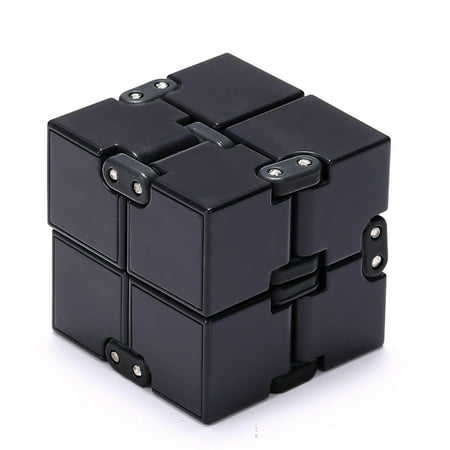
Some of Chewigem's items do cross over into the fidget category, but when I say fidget toys I mean things like fidget spinners, fidget cubes, stress balls, squishy putty and a whole lot more. One of my mutuals on Twitter posted a short video of her playing with some Thinking Putty which caught my eye as it looks great to play with. Another mutual uploaded a link to an Infinity Cube which also looks fun. There's a picture down below, and the link to the pictured Infinity Cube is here.

Image result for infinity cube
[Image description: A black Infinity Cube on a white background. The cube resembles a 4x4 Rubik's Cube and all the segments are joined by small hinges so that it can be unfolded, separated and played with.]

Sensory Aids
Depending on the needs or preferences of the autistic person you're buying for they may need any of a number of items to help with their sensory needs, and a lot of them fall within a reasonable gifting price range. The most common things are sunglasses and sound cancelling headphones but autistics can have a whole host of sensory issues so it's worth speaking to the person you're buying for if you're not sure what sensory preferences they have. It could be something as simple as loose fitting clothing for example.
Image result for sunglasses
[Image description: Sunglasses shown from the front on a plain background. The frames are thick and black, and the lenses are tinted blue.]

Weighted Blanket
This one tends to be quite expensive, but they can be quite helpful to a lot of people, not just autistics. My weighted blanket definitely helps me sleep, which is something I need since I work late and get up early with the kids. In fact, ever since my wife bought me it as an early birthday present a few months ago I've slept under it every night instead of our duvet. She got me it in the middle of summer when it's been quite warm, but I'm sure I'll use it a bit more in winter when I could do with a blanket while I work or while I play video games. My wife got me it quite cheap (we're talking under £30, as opposed to the usual hundreds) from a shop on Amazon that was quite new so they obviously wanted to get their foot in the door and some good ratings on the page. It's gone up in price since then as the shop gained more traction, but you can find my specific blanket here.

[Image description: My weighted blanket laid out neatly across my bed. It's a king-size bed with stripy, flowery bedding in grey and white. The blanket is dark grey with a soft and slightly fluffy top side.]

Special Interest Gifts
This one is pretty obvious, but any autistic loved one would be over the moon any gifts related to their special interest. Everyone has different interests but mine is professional wrestling. Last year one of the presents my wife got me for Christmas was a Becky Lynch action figure after I saw one in a shop and posted a picture of it on Twitter. This went alongside the John Cena figure I already had, and since then I've added Tyler Breeze and Alexa Bliss to the small collection. I'd be more than happy with almost any wrestling-related gifts. The kid in me would love a replica Universal Championship belt, but they're far too expensive and we've got nowhere to put one so that's not going to happen.

[Image description: The photo of the Becky Lynch figure that I posted on Twitter. It's from the Elite Collection and is from before her "The Man" gimmick as she's wearing her steampunk gear in the form of a long, black coat and brown top hat with goggles and a feather attached to it.]

These are my 5 gift ideas that you could buy for your autistic loved one(s). With any luck it's been helpful and given you some inspiration if you've been stuck on what to buy for them. As always, don't forget to follow me by hitting the "Subscribe" button at the top of the page, or on Twitter @DepictDave. It helps me out a lot!

Stimming: Why I Chew

First of all, sorry for not posting last week. There was too much going on for me over the course of Friday and Saturday so I didn't have time to commit to blogging. But that kind of leads me nicely into what I want to talk about this week, which is why I stim by chewing.

Let me start by explaining what stimming is. The Oxford English Dictionary defines it as:
"The repetition of apparently purposeless movements as a pattern of behaviour seen mainly in persons with autism or other neurodevelopmental disorders" 

That's only the external, neurotypical point of view and doesn't explain the reasons behind it. The purpose of stimming is for self-regulation. Everybody stims in one way or another because we all need a certain degree of sensory input to be able to function. The difference in autistics is that we find that we have to create or seek the sensory input ourselves. This could be for various reasons depending on the individual, but for example they might need more input than a neurotypical person, or they might not respond as much to whatever stimuli is in their immediate environment as a neurotypical person would.

So one of the many things that kept me busy last weekend was that we thew a surprise 60th birthday party for my aunty. All the family was there, and as usual I wore my chewer which is a button necklace from Chewigem (you can check them out here). I was playing around with my kids to keep them entertained when my dad noticed my chewer around my neck and asked about it, so I explained what it is. He didn't say anything about it but his look and his tone were very disapproving. Thinking about it, I'm not sure what he disapproved of more - the chewer itself, or the fact that I said the words "I'm autistic" out loud in public. I'm fine with what happened because people are always going to have their own opinions however closed minded they are. It's just annoying that my dad shrugs his attitude and ignorance off about this and lots of other things as just "old fashioned".

I've been inclined towards chewing for a lot longer than I realised until recently. It's only when looking back the other day that I realised how long I've displayed a tendency to chew. The earliest I can remember was when I was in primary school. I can't remember what school year I was in, but at primary school age I must have been between 5 and 11 years old. I was sat in lesson next to a small bookcase and I must have had an urge to chew something because I found myself trying to chew the corner of this bookcase. The teacher noticed and said if I'm hungry it's not long till dinner time. I also used to bite my nails quite badly when I was younger and I think this was more for the chewing action than anything to do with my nails.

Over recent years I've found myself chewing my fingers whenever I've been stressed. That ended up ruining the skin on my fingers, which is why I then bought my first chewer from Chewigem at the start of this year once I discovered that you could buy things like this. We spent last Christmas at my in-laws' house, and because my wife's got such a big family there were too many people there for me, there was too much going on and it was too loud in parts so I found myself later on in the day sat in the conservatory away from everyone else and biting my index finger to shreds. This is what finally prompted me to have a look online and see what I could find in terms of adult human chew toys, and once I got my first chewer it really saved my fingers. Going back to the situation with my dad, my wife tried to explain about my fingers to him as well, but it still didn't make any difference.

I really like Chewigem as a sensory shop but there are lots of others that were suggested to me when I asked around online in the hunt for my first chewer. I've only ever used Chewigem so far so I can't comment any any others, but it's always worth searching online and most stores who sell this kind of thing seem to have an eBay and/or Amazon store that you can find easily. The problem I've got with chew toys (which isn't even an issue with the actual toys) is that I'm a much heavier chewer than I first realised so it's not as long before my chewers get damaged as it would be for other people. My first chew toy was a hand fidget (pictured below), which isn't as durable as I need it to be so I soon ended up chewing right through it and having to get the button necklace that I've got now. Even that's starting to wear down now but it's taken much longer to damage this than it took to damage the hand fidget. That would be my advice if you're looking for a chew toy for yourself; be aware of what kind of chewer you are (light, heavy etc) and make sure you check each toy for its flexibility, durability and firmness which are all displayed clearly on the product page for every item from Chewigem.
[Image description: Me chewing my hand fidget with a thoughtful expression on my face. My hand fidget is a small, circular silicone toy with a black, grey and white camouflage pattern, and it has a bar in the middle which holds a black ball intended for spinning and fidgeting with. I'm holding one end with my hand while chewing the other end.]

Frozen 2: The Mental Health Message

First of all I need to let you know that this is potentially my last ever blog post. The reason for that is I've been looking to make th...