My son is 3 years old, about to turn 4 after Christmas. There have been things I've noticed about him that make me wonder if he might be autistic like me. Just little things and only occasionally, but there are things there making me suspect it nonetheless. We know that autism is (or at least can be) genetic, so it would completely make sense for any child of mine to potentially be autistic too. Before we dive in, I'm not saying that any given traits listed here are necessarily autism-related, rather that I feel there are too many of them to not at least consider the possibility of autism.
The first thing I've seen in him is that he seems to like lining things up neatly. I haven't seen him lining things up too often in the traditional sense, but he definitely likes building huge towers out of Lego and other things, which is essentially just lining things up but vertically instead of horizontally. He builds towers as big as he can with Lego, with Play Doh pots, sometimes with cushions. And I've found him lining things up on the floor like cars and dinosaurs before.
Something else he does is that when there's a loud noise such as a hoover or a hand dryer in a public toilet he'll cover his ears and complain that it's too loud. This is the one that I'm least convinced about being an autism trait because his sister does it too, and it never seems to actually upset him as such so I'm wondering if that's maybe just a child thing, but still. The possibility of autistic hypersensitivity can't be ruled out.
Speaking of hypersensitivity, he often complains that his eyes hurt. He had his eyes checked recently at the hospital and they found nothing wrong, which for me strengthens the case of it being a hypersensitivity to light. To be honest I haven't specifically noticed what his environment is usually like when his eyes hurt, but he has told me that it's when the lights are bright. I think it's definitely worth me noting down what the surroundings are like in future when he complains. The fact that he's had his eyes checked with no problems found is very similar to how I had my hearing checked several years ago because people noticed I couldn't hear them, yet the testing found that my hearing was fine. His eye pain could potentially be a light sensitivity just like my "hearing" issues are actually auditory processing issues.
After me mentioning that he might be autistic, my wife started to notice little things like he doesn't make eye contact that much. It's not something I've noticed myself, but that's maybe because I don't tend to do well with eye contact either. There's been times when she's had to tell him off that she's told him to look at her and he never does. It wasn't until I mentioned autism that she then realised that maybe that's why and demanding for him to look at her isn't doing any good. Because of my own aversion of eye contact, whenever I've told him off I've always told him to listen to me instead of to look at me.
He can be very hyper emotional at times. Sometimes when he shows this it can easily be put down to simply being a toddler and getting upset or throwing a tantrum as toddlers do. But other times it's not quite so subtle. When he watches anything on TV that even has the slightest bit of peril or threat he suddenly decides he doesn't like it and wants it turned off. It happened with Toy Story 1 and 2 when Buzz and Woody both lost their arms, it happened at the beginning of Ice Age when Scrat struggled to get that nut only to end up getting trampled on by a mammoth, and it even happened with the TV adaptation of The Gruffalo when the Gruffalo picked the mouse up to eat him, although he soon got used to that one. I think this is a sign of hyper empathy because he is a very caring boy and is usually happy to help or share with other people.
There are a couple of things that he is/was late at developing although I don't think that he's late to the point of being abnormal or causing a problem. His old childminder suggested that we had him referred to speech therapy because he was a bit behind but we've always put that down to him being born 8 weeks premature. The speech therapist wasn't worried and from memory I think they agreed with us. With that said there are certain sounds and words that he's currently struggling with saying so he's in the middle of being referred again, although from what we can tell it seems to be more to do with tongue tie this time than autism. We've also been trying to toilet train him for a while now, and it's only in the last couple of weeks or so that he's reached the point where he'll tell is he needs the toilet or he'll go to the toilet on his own so we've been able to completely switch him from nappies to pants until bed time. If I'm honest I think the main reason for him being delayed is that I've not been able to keep on top of training him like I really should have. He had gone backwards with toileting for a while until his nursery suggested trying him in just pants for a full day and he just took to it from there.
So there are a few reasons I think my son might be autistic. I'm not a psychologist or an expert but I think there's enough there to wonder about it. It doesn't make any difference to me or his mum whether he's autistic or not so we've got no plans to get him assessed. Whether he is or he isn't autistic nothing will change, and he's still the same handsome, funny, kind and caring boy that he's always been. All it means if he is autistic is that he's like me, which I can only see as a good thing.
I'm glad to be back to blogging after taking last week off. Let me know your thoughts and comments on this week's post and do the usual - subscribe with the button at the top, and follow me on Twitter @DepictDave. Also don't forget to send me your questions on Twitter using #AutQA for the Q&A post that I've got planned next week. You've only got 1 week to get your questions to me so do it now!


Exciting Things Coming
Just a quick post this week as I'm having a busy day and if I'm honest I haven't been mentally in the best place recently. I wanted to pop online anyway and give you a quick update of things that are planned/happening at the moment.
The first thing I want to mention is that the National Autistic Society is asking people to sign an open letter to all of the UK party leaders ahead of next month's general election. The letter brings to attention the fact that the updates to the government's autism strategy have been delayed because of this election, and it asks that the publishing of it takes a priority as soon as the next government is established. The existing autism strategy (entitled Think Autism ad published in 2014) is in place to support autistic adults by putting a duty on the government to produce guidance for local authorities to help them support autistics in a variety of ways including giving autism training for key staff and developing a clear pathway for autism assessment and diagnosis. The main update to the new strategy is that it will be extended to include children as well as adults. Please click here to read and sign the letter to the UK party leaders. At the time of posting this blog, they need just 600 more signatures to reach they target 5,000.
Second order of business is just a reminder to ask me any and all questions you've got over the next 3 weeks on Twitter using the hashtag #AutQA. I'll answer your questions in the 6th December Q&A post as that's the week of my first anniversary of being diagnosed.
I'm planning on taking a day to go out into York city centre for some market research to survey my fellow locals on their views, opinions and understanding of autism. I've always been curious to find out exactly what the people of York think and the logical/analytical side in me is keen to crunch some numbers and produce a report of my findings. With Christmas coming up it may be the perfect time to get out and find people to talk to so I'm going to aim for a day over the next couple of weeks or so and I'll keep you all posted.
Speaking of Christmas, I spent some time last night designing an autistic Christmas jumper that I'm looking to get printed for myself. Once I've got it I'll model it and post a photo online. The main reason I've designed it is for me to wear it myself, but I'll see what people think of it and if there's any interest in other people buying ones for themselves I might make a few more to sell. Who knows, maybe I'll end up following in the footsteps of some of my favorite autism advocates and creating my own autism clothing range!
The last thing to mention is that I'm looking at expanding the blog's online presence. I haven't really used Facebook for a long time now, but I'm thinking of creating a Depiction Of Dave Facebook page soon when I have the time to sit down and set it up properly. I'm also planning on re-branding my existing Instagram account to be a blog-only one. I've been using it as a personal account since I first installed the app in 2013 but I don't really post that much on it, so if I use it specifically alongside the blog I'll be able to increase my engagements and carve out another way to interact with you guys. Pinterest is another social media thing I'm keen to look at. If I'm honest I don't understand Pinterest but I know people and places that I can learn from as it's apparently a really good tool for bloggers to use.
I think that's everything I wanted to mention this week - just a quick one to keep you in the loop. As always, please follow the blog with the "Subscribe" button at the top of the page because it helps me out loads. Also feel free to follow me on Twitter @DepictDave. I'll keep you updated on any more social media pages as and when they happen, so there'll be loads of ways to follow me.
The Logic Of Death
I'm writing this the day after I had to have one of my pet rats put to sleep. Her name was Pebbles. She was old and she was the runt of her litter meaning that she was the more poorly one out of her, her sister and their mum who were all cage mates. She had a mammary tumour just next to her left fore leg and because of her age and her fragile health we decided it was best not to operate, but instead let her ride it out until her quality of life declined. That happened much sooner than I expected.
I like to think that I deal quite well with death, and I put that down to 2 things;
a) The fact that I've had countless different pets over the years and a number of them were put to sleep with me being there to see it, so I've experienced it enough to learn to cope. And,
b) I think autism helps me cope with it too. We autistics are often fiercely logical, so whenever I've experienced the death of a pet - or even a family member - I've always looked at the logical side of things. That's not to say that the emotions I feel are any less, but logic helps me cope with them. Admittedly I think I struggle to let my emotions out as much as I probably should do, but that's a separate issue. What I want to do in this post is look specifically at Pebbles' euthanasia and the logical way I processed (and still am processing) it.
The first and most obvious thing is looking logically at her age and her health to decide whether the risk of operating is worth it. We got Pebbles, her sister Ari and their mum Lennon from my wife's cousin because she wasn't able to look after them any more due to personal circumstances. We already had 2 rats called Sprout and Parsnip that we got from the RSPCA a couple of weeks earlier, and 4 out of the 5 rats had respiratory issues brought on by the stress of a new home. Pebbles was what the vet called "Patient Zero" as she was the one who was most affected by it and she showed the biggest improvement with the treatment they were given. Although she massively improved it soon became clear that she would probably never fully recover but she was well enough to have a good quality of life. Ari had a small lump that the vet noticed when we first got them and when it kept getting bigger and bigger we had it removed. A matter of weeks after that we noticed that Pebbles had a lump in the same place. It was just a small lump to begin with so we kept an eye on it to see if it would get any bigger. It did and the dilemma we had was whether to operate on Pebbles like we did with Ari, but we had to take into account that even though they're sisters they're 2 different rats with different levels of health. We also realised shortly after this that the trio were all older than we first thought, so with her age in mind as well as her respiratory issues we decided that operating was too risky and that it was better to just let her go when the time was right. Knowing that we considered these factors to make the right decision at the right time helped me to not feel guilt alongside the heartache of losing a beloved pet.
Another way of looking at it is that although we took them on, looked after them and cared for them as our own, the main reason we took on Pebbles, Ari and Lennon was as a favour to my wife's cousin who is going through a rough time at the moment. So we took the 3 rats on partly to help take the weight off her shoulders, and also to give the rats the best twilight years that we can as they definitely wouldn't have had that if we didn't re-home them. It gives me peace to know that we definitely did that. It's a shame that Pebbles didn't make it for as long as we expected, but again they're all older than we first realised so we now know that we probably won't have them for more than a year in total.
When we first got the mum/daughters trio we always planned to introduce them to Sprout and Parsnip (who I like to think of as the OG's as we had them first) and keep them all as cage mates, but because of their respiratory issues that wasn't a good idea to do right away. Following the course of treatment the vet said it would be best not to introduce the 2 groups at all because Pebbles wasn't likely to ever be fully healed. Now that Pebbles isn't with us any more we've decided to introduce Ari and Lennon to Sprout and Parsnip for a couple of reasons. The first reason is because rats are sociable animals who need to be kept in groups, or at the very least in pairs. Sprout and Parsnip are both only about 9 months old so we haven't had the same worry with them, but with Ari and Lennon being older we didn't see that we had a choice other than to introduce them otherwise when the next one dies it's going to leave 1 on her own which isn't good, and at least if we introduce them as 2 pairs instead of a 1 and a 2 it means that they've all got somebody that they're familiar with. The other reason we'll be introducing them is because the risk of their respiratory issues coming back is a lot lower now that the most prone one is gone. So the logic is that it's a blessing in disguise in this sense. As much as we love Pebbles, her not being here allows us to do what we were planning to do all along and keep all of the rats together in 1 cage. It protects the rats against ending up on their own when we lose any more of them, and it also works better for us in terms of only having to clean 1 cage out and so on.
The final bit of logic is the simplest one in that it's just the acceptance that death is inevitable to all of us and we all have our time. It was clear to me and my wife that it was just Pebbles' time. Rats only tend to live for about 3 years unless they're either really lucky or really well looked after, so the fact that Pebbles made it to 3 helps reassure us that she had a good long life despite the fact that we only took care of her for her final few months. Knowing my wife's cousin I've got no doubt that they were all looked after properly before they came to us so I'm sure she had a happy life as well as a long one.
While it's never nice to lose a pet I find that it certainly helps me to look logically at the situation and see what you can do with it. I think this applies to almost all aspects of life, and logical thinking is definitely something that is very common in autistics. It doesn't make the pain of losing a pet any better, but it does help me cope with it by analysing the reasons it happened and and the things that can be done with the situation I find myself in. I'll leave you with my favourite picture of Pebbles below, which I loved so much that I turned it into a meme. Rest in peace Pebs. Have loads of fun chewing everything in Rat Heaven.
This wasn't the post that I originally had planned for this week, but I hope you found it interesting or relatable. If you did, why not follow the blog with the Subscribe button at the top of the page, and follow me on Twitter @DepictDave.

The first and most obvious thing is looking logically at her age and her health to decide whether the risk of operating is worth it. We got Pebbles, her sister Ari and their mum Lennon from my wife's cousin because she wasn't able to look after them any more due to personal circumstances. We already had 2 rats called Sprout and Parsnip that we got from the RSPCA a couple of weeks earlier, and 4 out of the 5 rats had respiratory issues brought on by the stress of a new home. Pebbles was what the vet called "Patient Zero" as she was the one who was most affected by it and she showed the biggest improvement with the treatment they were given. Although she massively improved it soon became clear that she would probably never fully recover but she was well enough to have a good quality of life. Ari had a small lump that the vet noticed when we first got them and when it kept getting bigger and bigger we had it removed. A matter of weeks after that we noticed that Pebbles had a lump in the same place. It was just a small lump to begin with so we kept an eye on it to see if it would get any bigger. It did and the dilemma we had was whether to operate on Pebbles like we did with Ari, but we had to take into account that even though they're sisters they're 2 different rats with different levels of health. We also realised shortly after this that the trio were all older than we first thought, so with her age in mind as well as her respiratory issues we decided that operating was too risky and that it was better to just let her go when the time was right. Knowing that we considered these factors to make the right decision at the right time helped me to not feel guilt alongside the heartache of losing a beloved pet.
Another way of looking at it is that although we took them on, looked after them and cared for them as our own, the main reason we took on Pebbles, Ari and Lennon was as a favour to my wife's cousin who is going through a rough time at the moment. So we took the 3 rats on partly to help take the weight off her shoulders, and also to give the rats the best twilight years that we can as they definitely wouldn't have had that if we didn't re-home them. It gives me peace to know that we definitely did that. It's a shame that Pebbles didn't make it for as long as we expected, but again they're all older than we first realised so we now know that we probably won't have them for more than a year in total.
When we first got the mum/daughters trio we always planned to introduce them to Sprout and Parsnip (who I like to think of as the OG's as we had them first) and keep them all as cage mates, but because of their respiratory issues that wasn't a good idea to do right away. Following the course of treatment the vet said it would be best not to introduce the 2 groups at all because Pebbles wasn't likely to ever be fully healed. Now that Pebbles isn't with us any more we've decided to introduce Ari and Lennon to Sprout and Parsnip for a couple of reasons. The first reason is because rats are sociable animals who need to be kept in groups, or at the very least in pairs. Sprout and Parsnip are both only about 9 months old so we haven't had the same worry with them, but with Ari and Lennon being older we didn't see that we had a choice other than to introduce them otherwise when the next one dies it's going to leave 1 on her own which isn't good, and at least if we introduce them as 2 pairs instead of a 1 and a 2 it means that they've all got somebody that they're familiar with. The other reason we'll be introducing them is because the risk of their respiratory issues coming back is a lot lower now that the most prone one is gone. So the logic is that it's a blessing in disguise in this sense. As much as we love Pebbles, her not being here allows us to do what we were planning to do all along and keep all of the rats together in 1 cage. It protects the rats against ending up on their own when we lose any more of them, and it also works better for us in terms of only having to clean 1 cage out and so on.
The final bit of logic is the simplest one in that it's just the acceptance that death is inevitable to all of us and we all have our time. It was clear to me and my wife that it was just Pebbles' time. Rats only tend to live for about 3 years unless they're either really lucky or really well looked after, so the fact that Pebbles made it to 3 helps reassure us that she had a good long life despite the fact that we only took care of her for her final few months. Knowing my wife's cousin I've got no doubt that they were all looked after properly before they came to us so I'm sure she had a happy life as well as a long one.
While it's never nice to lose a pet I find that it certainly helps me to look logically at the situation and see what you can do with it. I think this applies to almost all aspects of life, and logical thinking is definitely something that is very common in autistics. It doesn't make the pain of losing a pet any better, but it does help me cope with it by analysing the reasons it happened and and the things that can be done with the situation I find myself in. I'll leave you with my favourite picture of Pebbles below, which I loved so much that I turned it into a meme. Rest in peace Pebs. Have loads of fun chewing everything in Rat Heaven.
This wasn't the post that I originally had planned for this week, but I hope you found it interesting or relatable. If you did, why not follow the blog with the Subscribe button at the top of the page, and follow me on Twitter @DepictDave.

[Image description: A picture of Pebbles sat on my shoulder and looking into my ear as if she's whispering to me. Pebbles is a white rat with a little bit of grey on the top of her head. The top caption says "Ssshhhh..." and the bottom caption says "Let me tell you a secret".]
Sensory Differences
At its simplest, autism is a difference in brain structure. This difference in the brain can cause all sorts of differences in how the autistic person experiences and processes any and all sensory stimuli. I briefly touched on sensory processing when I wrote-up my support sessions that I had a few months ago, but I wanted to go through some of the atypical ways my senses work in more detail.
There are 5 classic senses that everyone knows about; these being vision, hearing, touch, taste and smell. During my support sessions when they asked us what we think the 6th sense is I joked about seeing dead people, but in all seriousness there are vestibular, proprioception and interoception, making 8 senses in all.
Vestibular is the sense of balance and spatial orientation, co-ordinating the two for movement.
Proprioception is the sense of positioning of the body and its parts in 3 dimensional space and involves the effort that's used in movement.
Interoception is the sense of what's going on inside the body and helps to understand whether you're hungry, in pain, tired etc.
With any of the senses, the person can be either over-sensitive (hypersensitive), under-sensitive (hyposensitive), or both depending on the person and the situation. Hypersensitivity can lead to things like meltdown through the stimulus being too much and triggering the person's fight/flight response. It can also cause burnout through the person having to process so much at once, especially if it's over a prolonged period of time. Hyposensitivity is often found in sensory seekers where they need to find or create additional sensory input to get the amount they need. I personally haven't had any experience of being both hyper and hyposensitive interchangeably, but it can change depending on the situation, the person and the sensory input.
The first of my sensory differences that springs to mind is my hyposensitivity to pain. This explains why I enjoy getting tattooed as it's a sensory seeking activity for me as much as it is about the tattoos themselves. It also explains why when I was hospitalised a few weeks ago with appendicitis I a) struggled to rate the pain out of 10, and b) decided it was around 6 or 7 whereas most people with appendicitis would rate it higher. It felt horrible as it was, so I dread to think what it would have been like if I had a neurotypical pain tolerance! My experience of getting admitted to hospital didn't help as I was on my knees in the A&E waiting area in agony and vomiting for quite a while before I was given a bed or any pain relief, but I digress. My last thing to mention in regard to pain processing also relates to my preference for chewing. Before I got my chewer I found myself biting my fingers to shreds and I often found it enjoyable to bite my fingers hard enough for it to hurt. I do miss the pain of it, but now that I've got my chewer it's much better for my fingers and I get enough out of it when I need to.
I've always been aware that my sense of smell isn't brilliant compared to most people. I do detect smells in the air but not always, and if I do smell anything it's often only after somebody else has mentioned it that I notice it. I also really struggle to identify what a smell is. Being a parent of 2 young kids has taught me to identify the smell of a nappy that needs changing (and sometimes even which child specifically needs changing!), but even then I don't always pick up on it. It's a similar thing with taste in that I often can't identify a certain taste without knowing what it is that I'm eating. But they do say that smell and taste are pretty much the same sense except one is in the tongue and one is in the nose.
There are 5 classic senses that everyone knows about; these being vision, hearing, touch, taste and smell. During my support sessions when they asked us what we think the 6th sense is I joked about seeing dead people, but in all seriousness there are vestibular, proprioception and interoception, making 8 senses in all.
Vestibular is the sense of balance and spatial orientation, co-ordinating the two for movement.
Proprioception is the sense of positioning of the body and its parts in 3 dimensional space and involves the effort that's used in movement.
Interoception is the sense of what's going on inside the body and helps to understand whether you're hungry, in pain, tired etc.
With any of the senses, the person can be either over-sensitive (hypersensitive), under-sensitive (hyposensitive), or both depending on the person and the situation. Hypersensitivity can lead to things like meltdown through the stimulus being too much and triggering the person's fight/flight response. It can also cause burnout through the person having to process so much at once, especially if it's over a prolonged period of time. Hyposensitivity is often found in sensory seekers where they need to find or create additional sensory input to get the amount they need. I personally haven't had any experience of being both hyper and hyposensitive interchangeably, but it can change depending on the situation, the person and the sensory input.
The first of my sensory differences that springs to mind is my hyposensitivity to pain. This explains why I enjoy getting tattooed as it's a sensory seeking activity for me as much as it is about the tattoos themselves. It also explains why when I was hospitalised a few weeks ago with appendicitis I a) struggled to rate the pain out of 10, and b) decided it was around 6 or 7 whereas most people with appendicitis would rate it higher. It felt horrible as it was, so I dread to think what it would have been like if I had a neurotypical pain tolerance! My experience of getting admitted to hospital didn't help as I was on my knees in the A&E waiting area in agony and vomiting for quite a while before I was given a bed or any pain relief, but I digress. My last thing to mention in regard to pain processing also relates to my preference for chewing. Before I got my chewer I found myself biting my fingers to shreds and I often found it enjoyable to bite my fingers hard enough for it to hurt. I do miss the pain of it, but now that I've got my chewer it's much better for my fingers and I get enough out of it when I need to.
I've always been aware that my sense of smell isn't brilliant compared to most people. I do detect smells in the air but not always, and if I do smell anything it's often only after somebody else has mentioned it that I notice it. I also really struggle to identify what a smell is. Being a parent of 2 young kids has taught me to identify the smell of a nappy that needs changing (and sometimes even which child specifically needs changing!), but even then I don't always pick up on it. It's a similar thing with taste in that I often can't identify a certain taste without knowing what it is that I'm eating. But they do say that smell and taste are pretty much the same sense except one is in the tongue and one is in the nose.
The last one I'm going to mention isn't so much a hyper/hyposensitivity thing, rather it's more to do with the processing of it. This is my auditory processing difficulty. The example that I used in my autism assessment is that if me and my wife are both in the bathroom and one of us is in the shower while she's trying to talk to me, because of the noise of the shower I struggle to hear what she's saying even though I can hear her voice talking to me. My brain struggles to decipher both at the same time, so because the shower is the simpler one to figure out (it's a shower - it makes a shower noise) I can't figure out the words that Sarah is using despite the fact that I can hear her voice loud and clear. Looking back to when I was younger and used to go on nights out every weekend I now realise that my auditory processing issues were quite obvious back then as well. Everyone seemed to be able to hear each other absolutely fine over the music in whichever pub/club we were in but I struggled to make out what anyone was saying to me. This lead to people thinking that I needed to get my hearing checked when in fact my hearing itself has always been fine, it's just processing multiple sounds at the same time that I struggle with.
These are just the sensory differences that I'm aware of. I've been diagnosed for almost a year now but following diagnosis the journey of self-discovery and realisation can last a lifetime. There's also the fact that things can sometime change as we grow older, so I'm sure there are plenty of other differences that I'll notice and come to understand in myself as time goes on. Speaking of being diagnosed for a year, I'll be doing a special Q&A post on the week of my 1 year diagnosiversary (that's officially a word as of now), which will be in 5 weeks' time on 6th December. Please ask any and all questions that you've got for me on Twitter using the hashtag #AutQA and I'll answer them in that post next month. It doesn't even necessarily have to be about autism - depending how it goes I might answer some non-autism questions as well.
That's it from me this week. As always, please click the "Subscribe" button at the top of the page to follow the blog, and also please follow me on Twitter @DepictDave. It helps you keep up to date with the blog, and it helps me get the word out there for autism acceptance.
These are just the sensory differences that I'm aware of. I've been diagnosed for almost a year now but following diagnosis the journey of self-discovery and realisation can last a lifetime. There's also the fact that things can sometime change as we grow older, so I'm sure there are plenty of other differences that I'll notice and come to understand in myself as time goes on. Speaking of being diagnosed for a year, I'll be doing a special Q&A post on the week of my 1 year diagnosiversary (that's officially a word as of now), which will be in 5 weeks' time on 6th December. Please ask any and all questions that you've got for me on Twitter using the hashtag #AutQA and I'll answer them in that post next month. It doesn't even necessarily have to be about autism - depending how it goes I might answer some non-autism questions as well.
That's it from me this week. As always, please click the "Subscribe" button at the top of the page to follow the blog, and also please follow me on Twitter @DepictDave. It helps you keep up to date with the blog, and it helps me get the word out there for autism acceptance.
Victim Blaming: A Sudden Realisation
The reason I write this blog is because it's a way to use my limited time and skills the best way I can in autism advocacy. Any dealings in the world of autism will inevitably cross over into the mental health world although autism in itself isn't a mental health condition - it's just a difference in brain structure. It can also cross over into the way people treat each other and the way we raise our kids. This week's blog post isn't directly about autism other than being about the personal experience of an autistic person, but it does address my treatment at school and the issues it has caused. It's something that I suddenly realised today (although there is a delay of a few weeks between me writing this post and its scheduled publishing date) and it's something that the more I think about it the more I'm really unhappy about it. That being the heavy level of victim blaming that I was put through during my school years.
As a kid I was always bullied. Badly. On the surface of it, it was mostly for being overweight but I think I might have mentioned in a previous post that although I was severely overweight I wonder whether I would have been bullied anywhere near as much if I was neurotypical. It's clear to me that nobody knew I was autistic at the time but I must have been outwardly "autistic enough" to show some sort of difference or weirdness, and although they couldn't pin it on anything specific as they didn't know I was autistic they still saw fit to harass me for it. Targeting my weight was just the most obvious and easiest way they could do that. Why else would the autistic fat kid get bullied when the neurotypical fat kids were all treated absolutely fine? I tried countless times to get help to stop the bullying but my school did nothing about it. I was simply told to ignore the bullies and they'll stop. So I ignored them. They didn't stop. There were at least a couple of times when the bullying got so bad and/or I'd put up with it for so long that I reached breaking point (which takes A LOT for me) and I snapped and I physically lashed out at the bullies. Each time I reached breaking point and got into a fight the school would tell my parents "I'm not surprised, it's been a long time coming" and even "It's been heartbreaking to watch how the other kids treat him." Yet they were happy to punish me after they sat back, watched the abuse that the other kids put me through and did absolutely nothing about it. These teachers at my school were the so-called responsible adults whose care I was under. This is neglect and victim blaming, and it's absolutely not OK in any way, shape or form. It wasn't OK at the time and it'll never be OK due to the lasting damage that it's done to me, even now 16 years after I left school (I'm 32 - that's half my life!).
Because of the victim blaming I was put through I now feel like everything is my fault, or at least is going to get turned around and used against me. If there's something I don't agree with or where I should put my point across I don't, simply because growing up I was always told to ignore these things, encouraged to bottle it up, and then punished when it caused me to lash out. What kind of message does that send to a child at school age? It does nothing but show that their thoughts, their feelings, their opinions don't matter, and that when they reach out for help they'll either be ignored or have it turned around against them. If I'm completely honest I don't know which is worse. And yet people always wonder why I'm the quiet one and keep myself to myself. Your childhood is where you and your view of the world are shaped in preparation for adulthood. If your school can't (or in my case won't) set you up properly for adulthood then not only is it setting you up for failure in later life, but the school itself is failing in its duty of care.
I've always had a hard enough time talking to people and building relationships since I'm autistic but my experience at school certainly didn't help matters. The vast majority of my bullies at school were boys and I'm convinced that this is the reason I've always got on a lot better with girls. In fact, I'd even go as far as saying that I often feel intimidated by men to a certain degree, especially the ones who are overly laddish, macho and full of bravado. I would also partly blame this for my difficulty in forming romantic relationships as well. Because I always got on better with the girls I almost always found myself friend zoned when I hoped for something more. I'll leave the relationship side of it there because I've already addressed it in my previous post on Sexuality. Feel free to check it out if you want to delve deeper.
I have to wonder if things would have been different had it been known I was autistic. Both my primary and secondary school were equally guilty of ignoring the bullying that I went through, but looking back I think there was 1 teacher at my primary school who went as far as bullying me himself. I can't remember much about that part of my life but what I do remember is how he made it obvious that he didn't like me. I remember being put in detention a lot specifically by him although I really can't remember the reasons for it, and I'm not convinced that I knew/understood the reasons at the time. Based on what I can remember I think he probably just didn't like me because I was different, and I'm guessing that there was something I used to do that he saw as acting out when in fact it was most likely just autistic child behaviour. Either way, the way he treated me as well as the way my bullying was handled were unacceptable. I can't help thinking about whether this would have happened if the schools knew I was autistic? Would both primary and secondary schools have done more to protect me if they knew I was autistic? But then on the other hand, would an autism diagnosis have just given the bullies 1 more thing to target me for and made things worse? Would school have done more to establish and accommodate my needs outside of the bullying if they knew?
It's a shame that these questions will never be answered, and it's even more shameful that my experience at school has left me with these scars that I'll have for the rest of my life when they could have easily been prevented. It's strange how I never even thought about it this deeply until I saw a post on Twitter recently about a school that was guilty of victim blaming and it resonated with me so much. It's also strange how even though I always knew what happened at school it never really occurred to me how bad it really was until it got given the name victim blaming. I really wish that there was something I could do about it in terms of the specific schools I went to, but at least by blogging about my experience as well as about autism as a whole I'm raising awareness and educating so that hopefully the same kind of thing doesn't happen to other people.
It's been a bit of an emotional one this week but I hope it's helped put some things into perspective and helped your understanding. As always, feel free to comment if you've got any thoughts to share, and don't forget to follow the blog with the "Subscribe" button at the top of the page as well as following me on Twitter @DepictDave.
As a kid I was always bullied. Badly. On the surface of it, it was mostly for being overweight but I think I might have mentioned in a previous post that although I was severely overweight I wonder whether I would have been bullied anywhere near as much if I was neurotypical. It's clear to me that nobody knew I was autistic at the time but I must have been outwardly "autistic enough" to show some sort of difference or weirdness, and although they couldn't pin it on anything specific as they didn't know I was autistic they still saw fit to harass me for it. Targeting my weight was just the most obvious and easiest way they could do that. Why else would the autistic fat kid get bullied when the neurotypical fat kids were all treated absolutely fine? I tried countless times to get help to stop the bullying but my school did nothing about it. I was simply told to ignore the bullies and they'll stop. So I ignored them. They didn't stop. There were at least a couple of times when the bullying got so bad and/or I'd put up with it for so long that I reached breaking point (which takes A LOT for me) and I snapped and I physically lashed out at the bullies. Each time I reached breaking point and got into a fight the school would tell my parents "I'm not surprised, it's been a long time coming" and even "It's been heartbreaking to watch how the other kids treat him." Yet they were happy to punish me after they sat back, watched the abuse that the other kids put me through and did absolutely nothing about it. These teachers at my school were the so-called responsible adults whose care I was under. This is neglect and victim blaming, and it's absolutely not OK in any way, shape or form. It wasn't OK at the time and it'll never be OK due to the lasting damage that it's done to me, even now 16 years after I left school (I'm 32 - that's half my life!).
Because of the victim blaming I was put through I now feel like everything is my fault, or at least is going to get turned around and used against me. If there's something I don't agree with or where I should put my point across I don't, simply because growing up I was always told to ignore these things, encouraged to bottle it up, and then punished when it caused me to lash out. What kind of message does that send to a child at school age? It does nothing but show that their thoughts, their feelings, their opinions don't matter, and that when they reach out for help they'll either be ignored or have it turned around against them. If I'm completely honest I don't know which is worse. And yet people always wonder why I'm the quiet one and keep myself to myself. Your childhood is where you and your view of the world are shaped in preparation for adulthood. If your school can't (or in my case won't) set you up properly for adulthood then not only is it setting you up for failure in later life, but the school itself is failing in its duty of care.
I've always had a hard enough time talking to people and building relationships since I'm autistic but my experience at school certainly didn't help matters. The vast majority of my bullies at school were boys and I'm convinced that this is the reason I've always got on a lot better with girls. In fact, I'd even go as far as saying that I often feel intimidated by men to a certain degree, especially the ones who are overly laddish, macho and full of bravado. I would also partly blame this for my difficulty in forming romantic relationships as well. Because I always got on better with the girls I almost always found myself friend zoned when I hoped for something more. I'll leave the relationship side of it there because I've already addressed it in my previous post on Sexuality. Feel free to check it out if you want to delve deeper.
I have to wonder if things would have been different had it been known I was autistic. Both my primary and secondary school were equally guilty of ignoring the bullying that I went through, but looking back I think there was 1 teacher at my primary school who went as far as bullying me himself. I can't remember much about that part of my life but what I do remember is how he made it obvious that he didn't like me. I remember being put in detention a lot specifically by him although I really can't remember the reasons for it, and I'm not convinced that I knew/understood the reasons at the time. Based on what I can remember I think he probably just didn't like me because I was different, and I'm guessing that there was something I used to do that he saw as acting out when in fact it was most likely just autistic child behaviour. Either way, the way he treated me as well as the way my bullying was handled were unacceptable. I can't help thinking about whether this would have happened if the schools knew I was autistic? Would both primary and secondary schools have done more to protect me if they knew I was autistic? But then on the other hand, would an autism diagnosis have just given the bullies 1 more thing to target me for and made things worse? Would school have done more to establish and accommodate my needs outside of the bullying if they knew?
It's a shame that these questions will never be answered, and it's even more shameful that my experience at school has left me with these scars that I'll have for the rest of my life when they could have easily been prevented. It's strange how I never even thought about it this deeply until I saw a post on Twitter recently about a school that was guilty of victim blaming and it resonated with me so much. It's also strange how even though I always knew what happened at school it never really occurred to me how bad it really was until it got given the name victim blaming. I really wish that there was something I could do about it in terms of the specific schools I went to, but at least by blogging about my experience as well as about autism as a whole I'm raising awareness and educating so that hopefully the same kind of thing doesn't happen to other people.
It's been a bit of an emotional one this week but I hope it's helped put some things into perspective and helped your understanding. As always, feel free to comment if you've got any thoughts to share, and don't forget to follow the blog with the "Subscribe" button at the top of the page as well as following me on Twitter @DepictDave.
5 Gifts For Autistics
Christmas is only 68 sleeps away and whenever people ask me what I want for Christmas or birthdays I've never known what I wanted, but since being diagnosed autistic I've come to realise that there are quite a few different things that I could do with. This could be either because it's beneficial, or just because I like it. So here's a list of a few ideas that you could buy for the autistic in your life. Please also be aware that this post contains Amazon Associate links, which means that if you purchase the items via the links I will earn a small commission. The exception to this is the very first link, which is to Chewigem, not Amazon, so it's not part of any affiliate program.
Chew Toys
Last Christmas is where I really started to realise that I had a problem with chewing. When I say "problem" I only mean in the sense that because I'd never had a chew toy at that point I resorted to biting my fingers and left them in a pretty bad state. At the time I didn't know what was available for a chewing need like mine, so I asked in a Facebook group and people suggested a few different places. The one I ended up going with was Chewigem who sell a whole variety of chew toys as well as other things like noise cancelling ear plugs for example. I'll leave the link here for the button necklace I've got from them, but obviously it's best to have a look at their full range and see what you/the person your buying for might prefer. One bit of advice to bear in mind is that each chewable item they sell shows the durability, flexibility and firmness of the item you're looking at. You'll need to check these to make sure you get a chewer that's right for you/them. I didn't know about this when I ordered my first chewer and got one that I chewed through pretty quickly because I'm a heavier chewer than I realised.

Fidget Toys
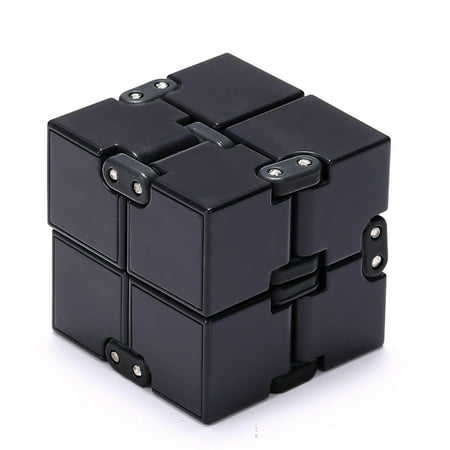
Some of Chewigem's items do cross over into the fidget category, but when I say fidget toys I mean things like fidget spinners, fidget cubes, stress balls, squishy putty and a whole lot more. One of my mutuals on Twitter posted a short video of her playing with some Thinking Putty which caught my eye as it looks great to play with. Another mutual uploaded a link to an Infinity Cube which also looks fun. There's a picture down below, and the link to the pictured Infinity Cube is here.


Chew Toys
Last Christmas is where I really started to realise that I had a problem with chewing. When I say "problem" I only mean in the sense that because I'd never had a chew toy at that point I resorted to biting my fingers and left them in a pretty bad state. At the time I didn't know what was available for a chewing need like mine, so I asked in a Facebook group and people suggested a few different places. The one I ended up going with was Chewigem who sell a whole variety of chew toys as well as other things like noise cancelling ear plugs for example. I'll leave the link here for the button necklace I've got from them, but obviously it's best to have a look at their full range and see what you/the person your buying for might prefer. One bit of advice to bear in mind is that each chewable item they sell shows the durability, flexibility and firmness of the item you're looking at. You'll need to check these to make sure you get a chewer that's right for you/them. I didn't know about this when I ordered my first chewer and got one that I chewed through pretty quickly because I'm a heavier chewer than I realised.

[Image description: My button necklace chew toy. It's circular and grey with a scaly pattern. The cord is black with a clasp in the middle and wrapped around in a circle-shape. The cord is tied to the chew toy through a small hole near the edge. The whole thing is sat on a wooden table.]
Some of Chewigem's items do cross over into the fidget category, but when I say fidget toys I mean things like fidget spinners, fidget cubes, stress balls, squishy putty and a whole lot more. One of my mutuals on Twitter posted a short video of her playing with some Thinking Putty which caught my eye as it looks great to play with. Another mutual uploaded a link to an Infinity Cube which also looks fun. There's a picture down below, and the link to the pictured Infinity Cube is here.
[Image description: A black Infinity Cube on a white background. The cube resembles a 4x4 Rubik's Cube and all the segments are joined by small hinges so that it can be unfolded, separated and played with.]
Sensory Aids
Depending on the needs or preferences of the autistic person you're buying for they may need any of a number of items to help with their sensory needs, and a lot of them fall within a reasonable gifting price range. The most common things are sunglasses and sound cancelling headphones but autistics can have a whole host of sensory issues so it's worth speaking to the person you're buying for if you're not sure what sensory preferences they have. It could be something as simple as loose fitting clothing for example.
[Image description: Sunglasses shown from the front on a plain background. The frames are thick and black, and the lenses are tinted blue.]
Weighted Blanket
This one tends to be quite expensive, but they can be quite helpful to a lot of people, not just autistics. My weighted blanket definitely helps me sleep, which is something I need since I work late and get up early with the kids. In fact, ever since my wife bought me it as an early birthday present a few months ago I've slept under it every night instead of our duvet. She got me it in the middle of summer when it's been quite warm, but I'm sure I'll use it a bit more in winter when I could do with a blanket while I work or while I play video games. My wife got me it quite cheap (we're talking under £30, as opposed to the usual hundreds) from a shop on Amazon that was quite new so they obviously wanted to get their foot in the door and some good ratings on the page. It's gone up in price since then as the shop gained more traction, but you can find my specific blanket here.

[Image description: My weighted blanket laid out neatly across my bed. It's a king-size bed with stripy, flowery bedding in grey and white. The blanket is dark grey with a soft and slightly fluffy top side.]
Special Interest Gifts
This one is pretty obvious, but any autistic loved one would be over the moon any gifts related to their special interest. Everyone has different interests but mine is professional wrestling. Last year one of the presents my wife got me for Christmas was a Becky Lynch action figure after I saw one in a shop and posted a picture of it on Twitter. This went alongside the John Cena figure I already had, and since then I've added Tyler Breeze and Alexa Bliss to the small collection. I'd be more than happy with almost any wrestling-related gifts. The kid in me would love a replica Universal Championship belt, but they're far too expensive and we've got nowhere to put one so that's not going to happen.

[Image description: The photo of the Becky Lynch figure that I posted on Twitter. It's from the Elite Collection and is from before her "The Man" gimmick as she's wearing her steampunk gear in the form of a long, black coat and brown top hat with goggles and a feather attached to it.]
These are my 5 gift ideas that you could buy for your autistic loved one(s). With any luck it's been helpful and given you some inspiration if you've been stuck on what to buy for them. As always, don't forget to follow me by hitting the "Subscribe" button at the top of the page, or on Twitter @DepictDave. It helps me out a lot!
Pablo Thinks Differently
This week I wanted to talk about something that I could have
included in my Autistic Parenting post the other week, but didn't think about
it until afterwards. It's something that with being both autistic and a parent
I feel strongly in support of. That being the kids' TV show Pablo on CBeebies
(or RTÉ Jr in reland).
The show follows the adventures of an autistic 7 year-old named Pablo as he tries to tackle life's difficulties from an autistic perspective with the help of his animal friends in his imaginary art world. The show starts and ends with live-action footage and has a cartoon animated middle portion as Pablo enjoys drawing and it's the animal characters and art world that he draws that help him work through his problems. Each of his animal friends represents a different autistic trait as alluded to by the theme song:
Ren is a canary who represents stimming - mainly in the form
of flapping as she's a bird.
Noasaurus (often shortened to Noa) is a dinosaur who
represents the anxiety that often comes with autism.
Draff is a giraffe and represents the intense interests and
hyper focus side of autism through his knowledge about lots of things and his
catchphrase "In point of fact."
Tang is an orangutan who represents difficulty
reading cues and social awkwardness. He's also quite clumsy which is common in
autistics.
Mouse is a mouse (as the name implies) who represents
hypersensitivity to sensory input.
Llama (again, as the name implies) is a llama who represents
echolalia. She doesn't have any of her own lines but repeats bits of what the
other characters say.
Pablo has an all-autistic cast, which is a first in TV history. The aim of the show is to humanise autism to its target audience (children from 0 to 6 years) and shows Pablo dealing with his problems in a way that children can understand so as to increase understanding and acceptance. For example, the episode "The Fiona" shows Pablo meeting his mum's friend Fiona and trying to process and piece together all the parts of her appearance to work out who she is. His hyper focus makes him see her curly ginger hair, her bright green top and its big red buttons etc. My favourite part of this episode is while everyone tries to work out "What's a Fiona?" Llama is seen bouncing around repeating "Fiona, Fiona, Fiona, Fiona..." The point that the show gets across is that Pablo tackles all of his problems himself and works out a solution in the end, showing that autistics are not only autonomous but also capable of making decisions and problem solving for ourselves. This is driven home even more by the fact that although Pablo is completely verbal in his art world, in the real world he is rarely verbal. In fact, in the whole of series 1 I think he's only been given 2 lines in the real world segments but I could be wrong about that.
All in all I think Pablo as a TV show is a fantastic concept that's much needed in today's world, and the execution of is brilliant from all involved. I would highly recommend checking it out, even if you don't have kids! If you're interested in autism at all it can give a good insight into an autistic child's mind. Series 2 started this past Monday, and it's also on Netflix so there's plenty of opportunity to have a look at it.
So that's my post about Pablo. Not the longest post I've written but it would have just been added onto the Autistic Parenting post had I thought of it at the time. As always, don't forget to click the "Follow" button in the side bar and the "Subscribe" button at the top, as well as following me on Twitter @DepictDave.
Subscribe to:
Posts (Atom)
Frozen 2: The Mental Health Message
First of all I need to let you know that this is potentially my last ever blog post. The reason for that is I've been looking to make th...

-
 There are a couple of posts that I've made on Instagram that list things I looked into, probably beyond the limit of what a neurotypical...
 -
My son is 3 years old, about to turn 4 after Christmas. There have been things I've noticed about him that make me wonder if he might be...
-
 Anyone who knows me knows that my main autistic special interest through my entire adult life has been professional wrestling. But ever sinc...